Imagine opening your new boutique in Bowral only to find your Wi-Fi drops out the moment three customers connect, or worse, realizing your switchboard isn't up to the 2026 energy standards after the walls are already sealed. It's a common fear for local business owners who want to grow but worry about falling behind complex NSW safety regulations. You need a space that works as hard as you do without the constant worry of non-compliance or technical bottlenecks. Using a clear commercial electrical fit-out checklist is the only way to ensure your project stays on track and within budget from day one.
We understand that balancing modern aesthetics with regional infrastructure needs can feel like a high-stakes puzzle. This guide provides a comprehensive roadmap to planning a safe, energy-efficient, and fully compliant electrical system for your Southern Highlands business. We'll walk you through the essential steps, from meeting the latest AS/NZS 3000:2018 Amendment 3 requirements to navigating the new mandatory digital CCEW submissions. You'll learn how to future-proof your data cabling and leverage NSW energy incentives to lower your long-term overheads while keeping your Mittagong or Bowral premises safe.
Key Takeaways
- Learn why a power capacity audit and adherence to the latest 2026 standards are the foundation of every successful project.
- Use our commercial electrical fit-out checklist to strategically place power points and data cabling for a clutter-free, connected workspace.
- Discover how energy-efficient LED upgrades and strip lighting can slash your overheads while enhancing your brand's aesthetic.
- Ensure your business meets all NSW safety regulations, including mandatory RCD installations and BCA-compliant emergency lighting.
- Navigate the unique challenges of regional projects, from heritage-listed Bowral shops to converted rural sheds in the Southern Highlands.
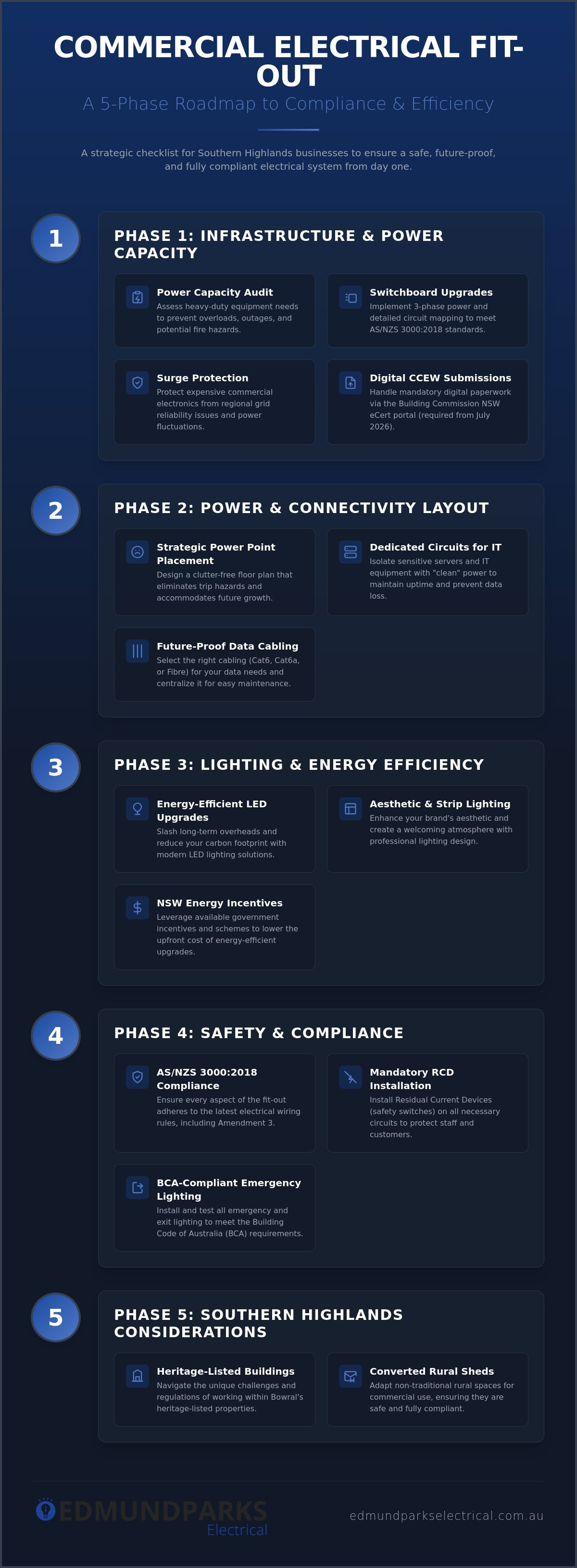
Phase 1: Infrastructure Assessment and Power Capacity
A commercial electrical fit-out is the structural backbone of your business operations. Unlike residential work, which focuses on domestic comfort, commercial projects prioritize heavy-duty reliability and strict legal compliance. Every item on your commercial electrical fit-out checklist must account for high-usage environments where a single power failure can halt production or drive customers away. We don't just pull cables; we design a system that supports your specific workflow while meeting the rigorous requirements of the Building Code of Australia.
Before you pick out designer lighting or office furniture, you need a professional power capacity audit. This is non-negotiable for Southern Highlands businesses, especially those moving into older storefronts in Bowral or converted industrial spaces. We identify the specific demands of your specialized equipment, whether that is high-speed industrial printers, commercial kitchen ovens, or heavy machinery. Getting this right early prevents the costly mistake of underestimating your load, which often leads to frequent outages and potential fire hazards.
Switchboard Upgrades and Capacity Planning
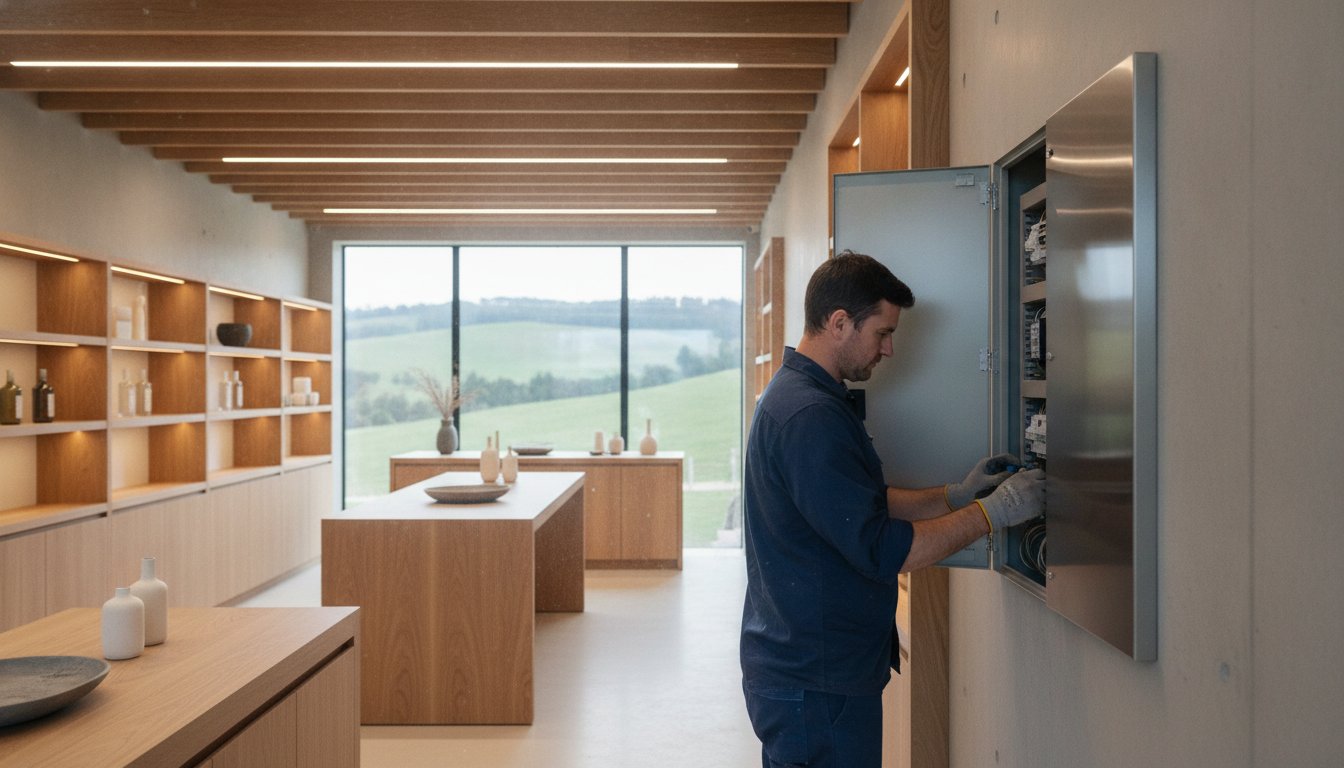
Your switchboard is the brain of the operation. Most modern businesses now require 3-phase power to run high-demand equipment efficiently without straining the system. Detailed circuit mapping is essential to prevent overloaded breakers. It ensures that if one area faces a fault, the rest of your shop or office stays powered. This is why switchboard upgrades are the foundation of any commercial expansion. We ensure every installation meets AS/NZS 3000:2018 standards, including the mandatory Amendment 3 requirements that become essential for new constructions after November 12, 2026.
Site Assessment for Regional Infrastructure
Infrastructure in towns like Moss Vale or Bundanoon can face unique local challenges. Regional grid reliability varies, making high-quality surge protection a necessity to protect your investment in expensive commercial electronics. Electrical wiring standards dictate how we coordinate with local utility providers for meter upgrades or new connections. Our team handles the technical coordination with providers and manages the paperwork, including the mandatory digital CCEW submissions through the Building Commission NSW eCert portal required from July 1, 2026. This proactive approach keeps your project on schedule and fully compliant with state law.
Phase 2: Power and Connectivity Layout
A key part of your commercial electrical fit-out checklist is the floor plan. It's not just about where the desks go; it's about where the power meets the people. Messy extension cords are more than just an eyesore. They're a significant trip hazard and a fire risk in a busy office or retail space. We design layouts that place power points exactly where you need them today while leaving room for where you might be tomorrow. This involves looking at current NSW electrical standards to ensure every outlet is safe and accessible for your staff.
Sensitive IT equipment and server racks require dedicated circuits to maintain uptime. You don't want a faulty toaster in the breakroom taking down your entire digital infrastructure. We plan for "clean" power that isolates your most critical hardware from the rest of the building's load. Future-proofing is about more than just adding extra sockets. It's about designing a modular layout. If you decide to reconfigure your office or add a new department in Moss Vale next year, your electrical backbone should be ready to adapt without a full renovation. If you're unsure where to start with your layout, we can help you design a custom connectivity plan that fits your specific building.
Data Cabling and Communication Hubs
Choosing the right cable is vital for long-term efficiency. Cat6 is excellent for standard offices, but Cat6a or Fibre might be necessary for businesses handling large media files or complex cloud databases. We focus on centralizing your data cabinet in a ventilated area. This makes maintenance easier and prevents expensive hardware from overheating. Integrating high-quality data and communication cabling into your initial fit-out is much cheaper than trying to retrofit it later when your team expands.
Optimised Wi-Fi and Networking
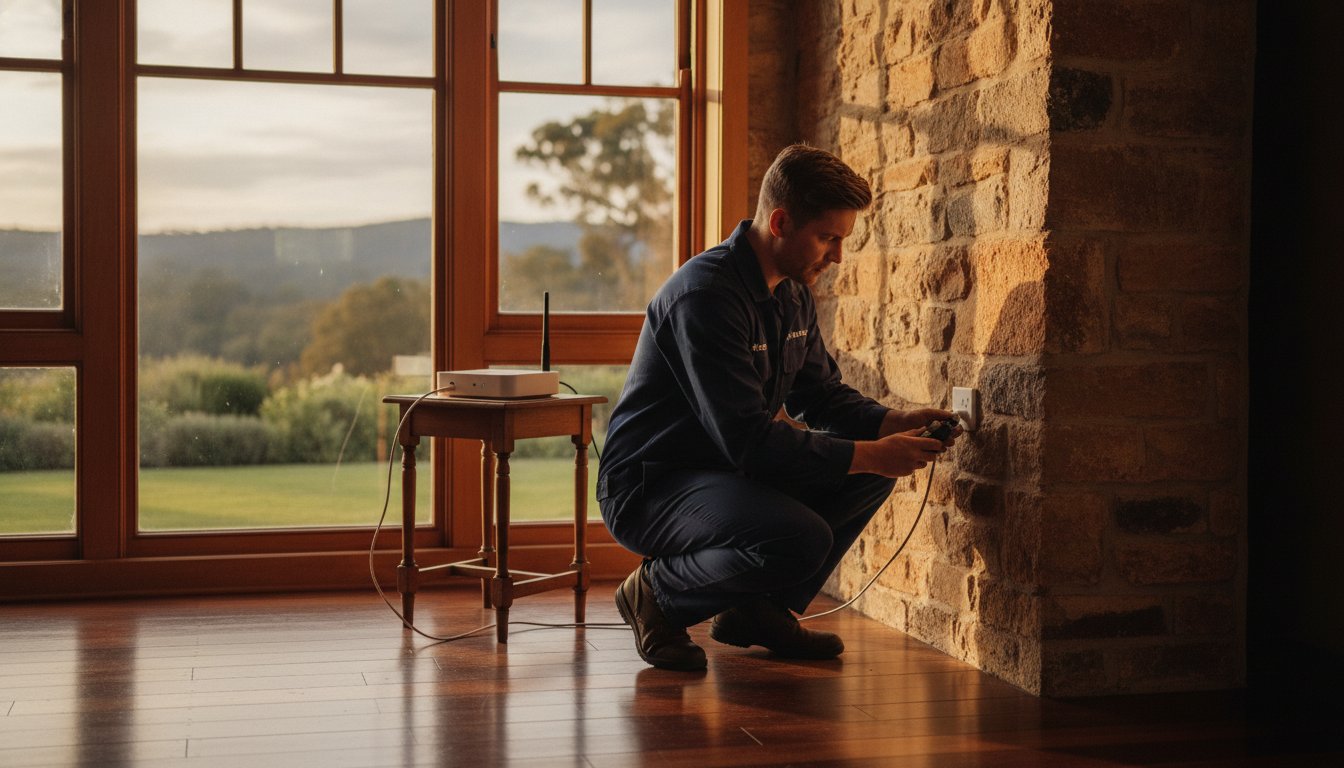
Regional businesses often struggle with patchy NBN or signal interference. Thick brickwork in heritage Bowral buildings can act like a shield against Wi-Fi, creating frustrating dead zones. We use heat mapping technology to identify these problem areas during the planning phase. By installing Wireless Access Points (WAPs) in the right spots, we ensure seamless roaming throughout your premises. Separating guest and staff networks is another essential step. It keeps your internal data secure while providing a professional, high-speed experience for your clients.
Phase 3: Lighting Design and Energy Efficiency
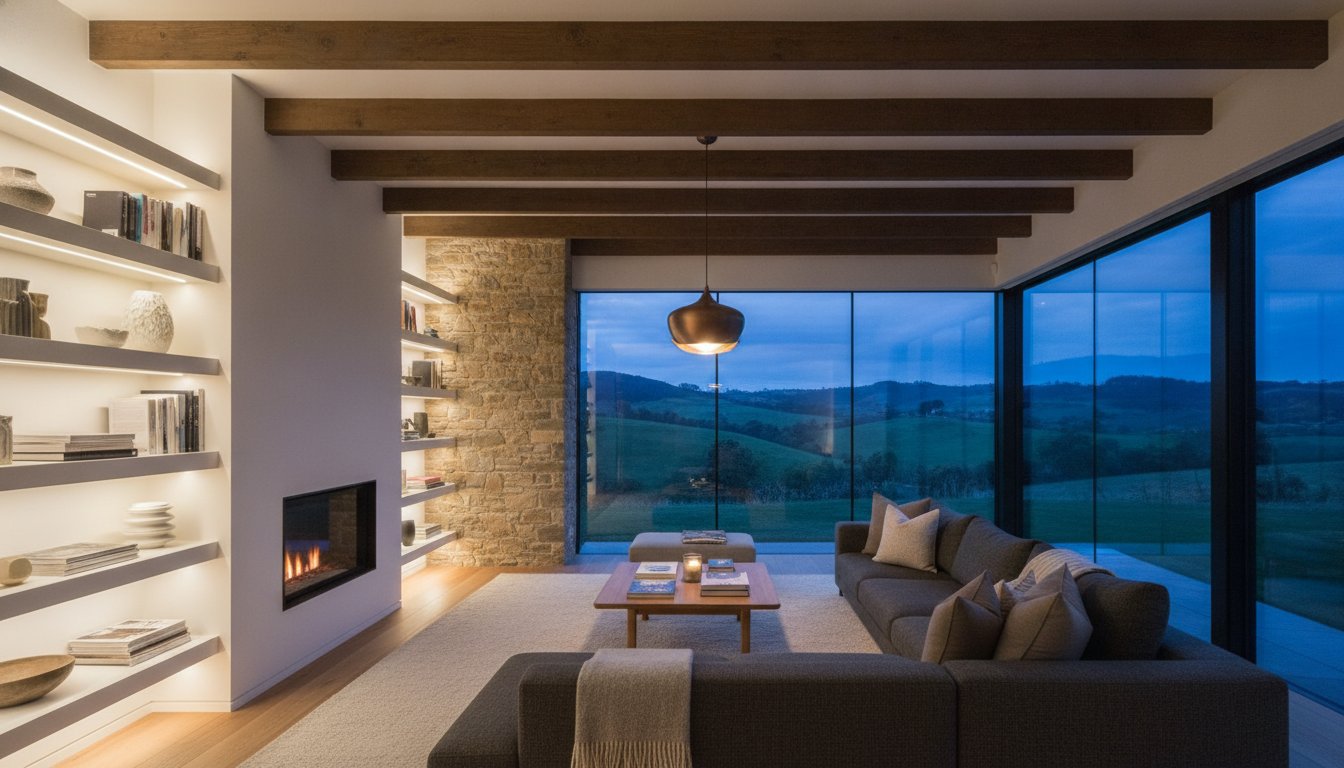
Lighting is the most visible part of your project. It shapes how customers perceive your brand and how your team feels at work. A thoughtful commercial electrical fit-out checklist treats lighting as a strategic asset rather than just another utility. We focus on creating a balance between bright, task-oriented areas and comfortable, ambient spaces. This approach ensures your business complies with workplace health and safety laws regarding adequate illumination while keeping your energy footprint small.
The transition to high-efficiency LED systems is the fastest way to slash commercial energy bills. Modern LED panels provide consistent, flicker-free light that mimics natural daylight. This reduces fatigue for staff working long hours in office or retail settings. By integrating smart lighting controls and motion sensors, you can automate these savings. These systems ensure lights only run when rooms are occupied. It is a vital feature for bathrooms, stockrooms, and meeting areas where lights are often left on accidentally.
Architectural LED Strip Lighting
We specialize in using LED strip lighting to elevate commercial aesthetics. It is a powerful tool for highlighting architectural features, illuminating signage, or creating a high-end feel in reception areas. Choosing the right color temperature is critical. Warm whites create a cozy, inviting atmosphere for boutiques or cafes. Cool whites are better for detail-oriented tasks in showrooms or medical suites. We use accent lighting in coves and under cabinets to add depth to your space without adding significant heat or cost.
Sustainable Energy Upgrades
Switching from legacy fluorescent tubes to modern LEDs offers a high ROI through reduced maintenance and lower consumption. These energy efficient upgrades also help your business qualify for green certifications and potential incentives under the NSW Energy Savings Scheme (ESS). Implementing smart sensors can reduce lighting energy waste by up to 30%. Under the NCC 2025 standards, these efficiency measures are becoming increasingly mandatory for new fit-outs. We help you navigate these rules so your business remains modern, sustainable, and fully compliant with the latest regulations.
Phase 4: Safety, Compliance, and Legal Obligations
Safety is the most critical stage of your project. It is where professional expertise meets legal necessity to protect your staff and your investment. Your commercial electrical fit-out checklist must prioritize the mandatory installation of RCDs (Safety Switches) on every single circuit. Under the Work Health and Safety Act 2011 (NSW), you have a legal duty as a business owner to identify and manage electrical risks. We ensure your premises are not just functional, but fully protected against faults that could lead to injury or fire.
Smoke alarms and fire detection systems must be integrated directly into your electrical plan. For commercial premises in 2026, these systems are more sophisticated than residential versions, often requiring interconnection to ensure an alarm in one area alerts the entire building. Once the physical work is done, we provide a Certificate of Compliance for Electrical Work (CCEW). From July 1, 2026, these must be submitted digitally through the Building Commission NSW eCert portal. We handle this digital filing for you, providing the legal proof that your fit-out meets all current NSW regulations.
Emergency and Exit Lighting Compliance
Emergency and exit lighting is a non-negotiable requirement under the Building Code of Australia (BCA). These systems must provide clear illumination during a power failure to allow for safe evacuation. Every exit sign we install is designed to pass a 90-minute discharge test, ensuring the battery backup holds up when it matters most. We map out clear evacuation paths with illuminated signage that remains visible even in smoke-filled conditions. Regular maintenance schedules are essential to stay compliant with Australian Standards over the long term.
Workplace Safety Installations
We focus on installing accessible safety switches that act as a first line of defense for your team. In regional areas like the Southern Highlands, surge protection is equally vital to prevent fire risks caused by grid fluctuations or lightning strikes. For businesses with outdoor seating or commercial kitchens, we ensure all power points are correctly IP-rated to resist moisture and dust. Additionally, all portable workplace appliances must undergo regular "Test and Tag" procedures as per AS/NZS 3760:2022 to maintain a safe environment. If you need to bring your existing premises up to code, you can book a safety switch installation with our local team today.
Phase 5: Local Considerations for Southern Highlands Businesses
The Southern Highlands isn't a one-size-fits-all region. Every town has its own character and unique infrastructure challenges. Bowral storefronts often sit in heritage-listed shells, while a business in Burrawang might operate out of a converted dairy or barn. Your commercial electrical fit-out checklist must be flexible enough to handle these local quirks. We focus on delivering modern power solutions that respect the history of our region while providing the high-speed connectivity today's businesses demand.
Weather patterns in the Highlands also play a major role in your electrical planning. Our cold winters and occasional severe storms mean that outdoor electrical components, such as signage and security lighting, require high IP ratings to prevent moisture ingress. Working with a Mittagong-based team ensures you have partners who understand the local grid and the specific requirements of the Wingecarribee Shire Council. We take pride in being a local fixture, offering the rapid support and regional knowledge that out-of-town contractors simply can't match.
Rural-Commercial and Heritage Challenges
Fitting out a heritage building in Bowral or Mittagong requires a delicate touch. We specialize in discreetly wiring these premises, often using creative pathways to avoid compromising structural integrity or historical features. For rural sites, such as converted sheds or barns, the challenge is often limited power availability. We assess whether your site needs a phase upgrade to handle high-load machinery or commercial refrigeration. Providing reliable Wi-Fi and data to these remote sites is another priority. We use high-gain antennas and strategic cabling to ensure your rural office stays as connected as any city suite.
Choosing Your Local Electrical Partner
Selecting the right partner means finding someone who understands the Bowral and Mittagong business landscape. You need a team that can respond quickly when issues arise; downtime in a regional area is costly and difficult to manage without local help. When evaluating contractors, check for their experience with regional infrastructure and their ability to provide rapid emergency support. Local knowledge helps avoid common pitfalls, such as underestimating the impact of regional power fluctuations on sensitive equipment. Edmund Parks Electrical is committed to providing the Southern Highlands with expert electrical craftsmanship and a steadfast focus on workplace safety.
Future-Proof Your Commercial Space Today
Building a successful business in the Southern Highlands starts with a solid foundation. By following a structured commercial electrical fit-out checklist, you ensure your premises are safe, efficient, and ready for future growth. We've explored how capacity audits, aesthetic LED lighting, and strict adherence to 2026 safety standards protect your bottom line. Whether you're renovating a heritage shop in Bowral or setting up a modern office in Moss Vale, getting the electrical work right the first time prevents costly downtime and legal headaches.
Our team brings local Mittagong expertise and a deep understanding of AS/NZS 3000 standards to every project. As licensed and insured NSW electricians, we take pride in helping our neighbors build spaces that stand the test of time. Don't leave your compliance to chance or your data connectivity to guesswork. Request a Commercial Fit-Out Consultation for Your Highlands Business today and let's start planning your next move. We're here to provide the peace of mind you need to focus on running your business.
Frequently Asked Questions
What are the legal requirements for a commercial electrical fit-out in NSW?
All commercial work must comply with the AS/NZS 3000:2018 Wiring Rules, including the latest amendments. From July 1, 2026, all Certificates of Compliance for Electrical Work (CCEW) in New South Wales must be submitted electronically through the Building Commission NSW eCert portal. Your project must also meet the National Construction Code (NCC) standards and include mandatory RCD protection on all circuits to ensure workplace safety.
How much power does my new office or retail space actually need?
Your power requirements depend entirely on your equipment load and expected growth. A standard office might operate on single-phase power, but a Mittagong cafe or a business using heavy machinery will likely require a 3-phase power upgrade. We conduct a detailed power capacity audit as part of your commercial electrical fit-out checklist to ensure your system handles peak demand without tripping breakers.
Do I need to upgrade my switchboard for a small commercial renovation?
Yes, an upgrade is often necessary if your existing board cannot accommodate the mandatory safety switches (RCDs) required by modern law. Even small renovations usually involve adding new power points or data lines, which can strain an older system. Upgrading ensures your board meets 2026 safety standards and provides a reliable foundation for any future technology you might add to your business.
How long does a typical commercial electrical fit-out take to complete?
A small retail fit-out typically takes one to two weeks, while larger office spaces can take four to six weeks or more. The timeline depends on the complexity of the data cabling, lighting design, and any necessary infrastructure upgrades. We provide a clear schedule at the start of the project to help you coordinate with other trades and plan your grand opening in the Highlands.
What is the difference between Cat6 and Cat6a cabling for my business?
Cat6 cabling supports speeds up to 1 Gbps, while Cat6a is designed for 10 Gbps and offers superior shielding against interference. For most Bowral offices, Cat6 is sufficient for daily tasks, but Cat6a is the better choice for future-proofing and handling large data transfers. Choosing the right cabling during your fit-out prevents the need for expensive network upgrades just a few years down the track.
Are emergency exit signs mandatory for small retail shops in the Highlands?
Yes, most commercial premises must have illuminated emergency exit signs and path lighting under the Building Code of Australia (BCA). These systems must pass a 90-minute discharge test to ensure they remain lit during a power failure or emergency evacuation. It is a critical legal requirement that protects your staff and customers while ensuring your business remains compliant with NSW safety regulations.
How can I make my commercial fit-out more energy-efficient?
The most effective way to improve efficiency is by installing high-output LED lighting paired with smart motion sensors. These sensors ensure lights only operate when a room is in use, which can reduce lighting energy waste by up to 30%. You should also consider energy-efficient upgrades for your HVAC systems and use programmable timers for external signage to lower your long-term overheads.
Can I use residential-grade lighting for my commercial space?
No, residential lighting is not designed for the long operating hours and rigorous safety standards of a commercial environment. Commercial-grade fittings offer better heat dissipation, higher durability, and specific lumen outputs required for workplace productivity. Using the correct commercial fixtures ensures your fit-out meets fire safety codes and provides a professional aesthetic that lasts for years in a high-traffic setting.