
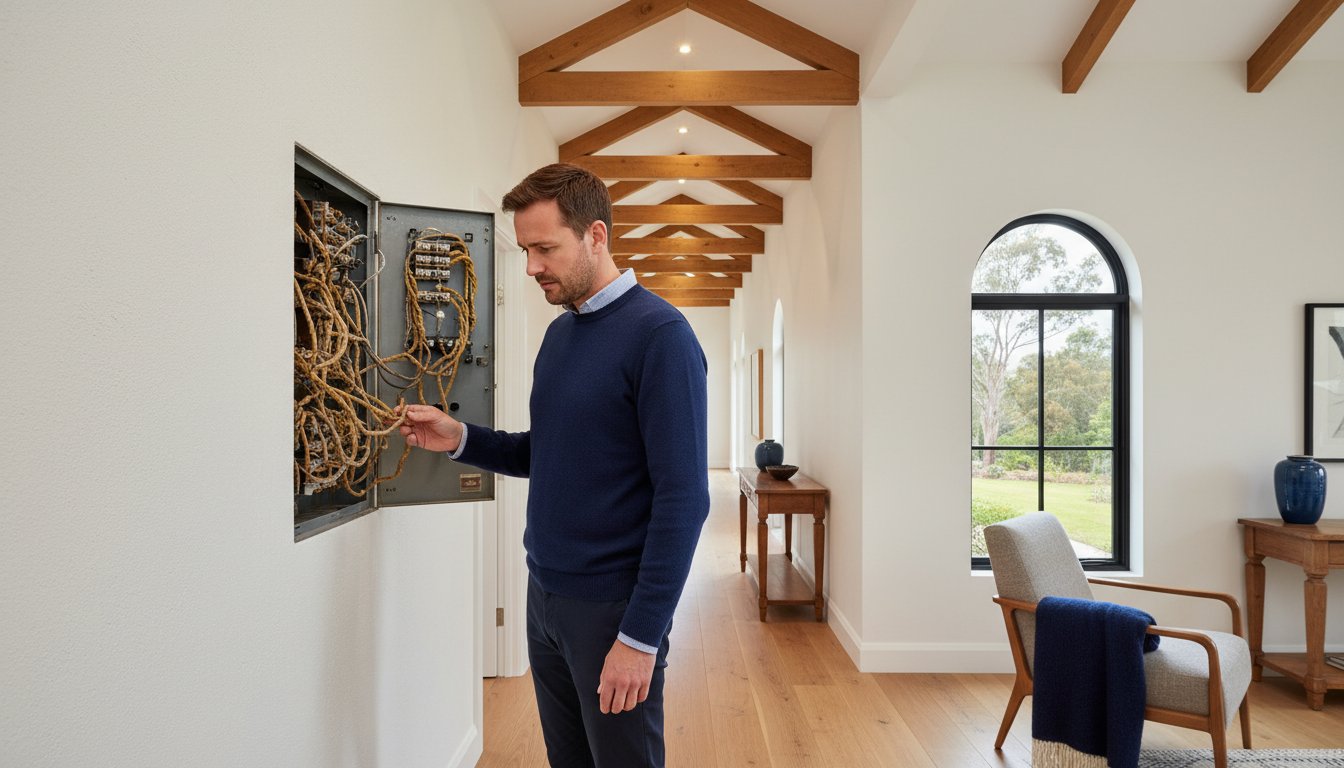
What if that "simple" weekend project in your Bowral cottage actually voided your home insurance and put your family at risk? With the cost of living hitting record highs in 2026, it's tempting to grab the tools and handle home repairs yourself. We know it's frustrating waiting for a tradesperson to travel out to the Southern Highlands, especially when social media makes every job look like a five-minute fix. However, understanding diy electrical safety australia is about more than just avoiding a shock; it's about staying on the right side of the law. In Australia, the regulations are much stricter than what you see on American or UK renovation shows.
You want a home that's safe, functional, and fully insured. We agree that maintenance shouldn't be a headache or a massive drain on your wallet. This guide will show you exactly where the legal line is drawn, why those overseas "how-to" videos are dangerous for Aussie homes, and how to keep your property safe. We'll break down the specific tasks you can legally tackle and the hidden risks that require a licensed professional to ensure your Mittagong home stays protected.
Key Takeaways
- Understand the strict NSW "Don't Do It Yourself" (DDIY) laws and why most electrical work is legally off-limits for homeowners.
- Identify the hidden fire hazards found in Mittagong’s legacy wiring and aging switchboards before they become a major safety risk.
- Master the basics of diy electrical safety australia by learning which simple tasks are legal and which require a licensed sparky.
- Avoid the "Insurance Trap" by discovering how unlicensed electrical work can completely void your home insurance policy and financial protection.
- Learn how local expertise and 2026 compliance standards keep your Southern Highlands home safe, efficient, and fully protected.
Is DIY Electrical Work Legal in NSW? The Australian "DDIY" Rule
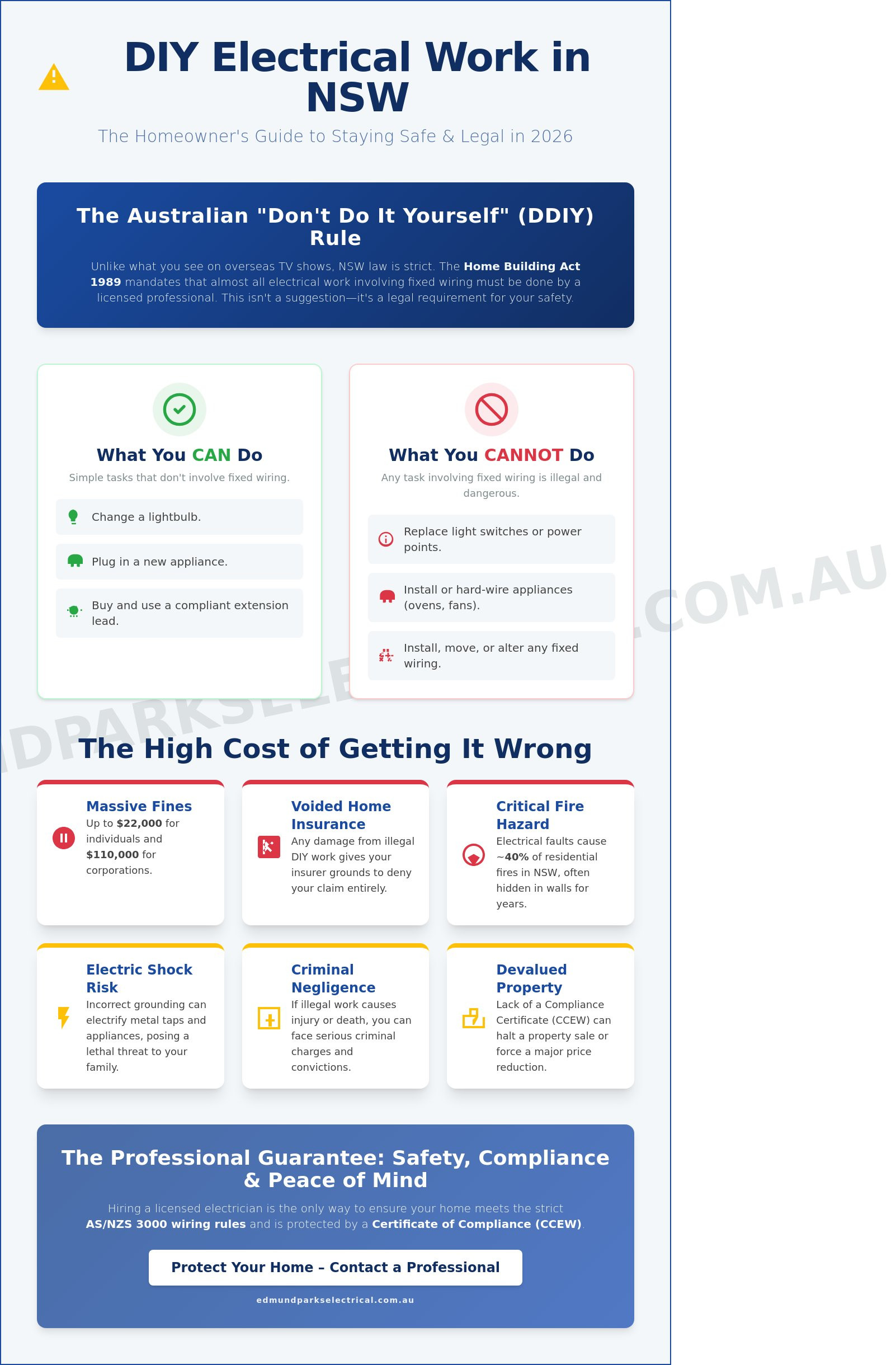
Australia takes a firm stance on home maintenance: Don't Do It Yourself. This isn't just a friendly suggestion from your local sparky; it's a legal mandate known as the DDIY rule. In New South Wales, the NSW Home Building Act 1989 dictates that any electrical wiring work must be performed by a person holding a valid license. While homeowners in the US or UK might legally swap out their own light fittings, diy electrical safety australia standards are significantly more rigid to prevent house fires and accidental electrocution.
The reason for these strict laws comes down to the AS/NZS 3000 wiring rules. These standards ensure that every connection in your Southern Highlands home meets rigorous safety benchmarks. NSW Fair Trading acts as the watchdog here, enforcing these regulations to protect families from subpar workmanship. We've seen plenty of "handyman" jobs in Moss Vale and Bowral that look fine on the surface but hide dangerous faults behind the plaster. Staying legal isn't just about avoiding a ticket; it's about making sure your home remains a safe place to live.
The Legal Consequences of Unlicensed Work
Ignoring the law carries heavy penalties. If NSW Fair Trading identifies illegal electrical work, an individual can face on-the-spot fines or court-ordered penalties reaching A$22,000. For corporations, these fines can climb to A$110,000. The risks go beyond your wallet, too. If unlicensed work results in a fire or injury, the homeowner can face criminal convictions for negligence. Furthermore, your home insurance policy likely contains a clause that voids coverage for any damage caused by unlicensed electrical work. When it's time to sell your property, you're required to disclose all major works. A lack of a Certificate of Compliance for Electrical Work (CCEW) can stall a sale or force a significant price drop during the building inspection phase.
Common Tasks That Are Strictly Illegal for DIY
Many homeowners are surprised by how little they can legally do themselves. If a task involves "fixed wiring," you need a licensed professional. This includes:
- Replacing or moving light switches and power points.
- Installing or repairing ceiling fans.
- Hard-wiring new appliances like ovens or cooktops.
- Constructing or repairing your own extension leads.
- Installing or moving any wiring in heritage Bowral homes, where old "TRS" or "cotton" cables are often brittle and dangerous.
While you can legally change a lightbulb or buy a plug-in floor lamp, almost everything else requires a qualified expert. We take pride in being fully licensed and insured, providing the Southern Highlands community with the peace of mind that every job is compliant and safe. Don't risk your home or your life on a weekend project that should have been handled by a professional.
The Hidden Dangers of Unlicensed Electrical Work in Southern Highlands Homes
Taking on a weekend project might seem harmless, but unlicensed work often leaves behind "invisible" faults. These aren't just minor errors; they are the primary cause of structural house fires. In New South Wales, electrical failure or malfunction contributes to approximately 40% of residential fires annually. When you attempt diy electrical safety australia tasks without a license, you risk your home and your family. Most DIY mistakes remain hidden behind walls until a circuit overloads or a wire arcs.
Many homes in Mittagong still rely on legacy wiring and aging switchboards installed over 40 years ago. These systems weren't built for the power demands of modern air conditioning or EV chargers. Watching a YouTube tutorial is a massive gamble. Those videos rarely account for the strict Australian AS/NZS 3000 standards, which dictate everything from cable insulation to circuit protection. Following SafeWork NSW electrical work regulations isn't just about red tape; it's about life and death. Incorrectly grounded circuits are a common result of DIY attempts. This leads to "tingles" or shocks from metal taps and appliances. These aren't minor nuisances; they are urgent warnings that your electrical system is potentially lethal.
Risks for Rural Properties and Sheds
Outbuildings in Canyonleigh or Joadja face unique environmental risks. A common mistake involves running underground cabling to a shed without using the correct heavy duty conduit. If cables aren't buried at the required 600mm depth, they are easily hit by shovels or machinery. These rural "patch jobs" are a leading cause of farm electrical fatalities in Australia. Exposure to moisture in the soil can quickly degrade non-compliant wiring, leading to short circuits or electrified fences.
Heritage Homes and Vulnerable Infrastructure
Bowral and Moss Vale cottages have beautiful bones but fragile electrical systems. Trying to pull new wires through lath-and-plaster walls often causes permanent structural damage. Heritage timber is often bone-dry and highly flammable. One loose connection from a DIY light fitting can ignite a fire inside a wall cavity where it can't be seen. Professional fault finding is the process of using specialized diagnostic tools to locate hidden electrical defects without destroying your home's historic character. If your lights are flickering or your breakers trip often, it's time to talk to a local licensed sparky who understands these older systems.
DIY vs. Professional: Comparing the Real Costs and Risks in 2026
Saving a few hundred dollars on a weekend project feels like a win until the smoke starts. Many Southern Highlands homeowners consider tackling wiring to cut costs, but the math simply doesn't add up in 2026. A DIY light fitting might save you A$150 in labor. However, that same unlicensed connection can lead to a house fire that costs A$800,000 or more to fix. Hiring a local Mittagong sparky is always cheaper than a post-fire rebuild. You aren't just paying for a wire to be connected; you're paying for the peace of mind that your family is safe while they sleep.
Understanding diy electrical safety australia standards means recognizing that almost all fixed electrical work in NSW must be done by a licensed professional. It's a legal requirement designed to keep homes standing. When you choose a professional, you're investing in a qualified expert who understands the unique demands of local heritage homes and modern builds alike. We see the faults that untrained eyes miss, from degraded insulation to overloaded circuits that are ticking time bombs.
Insurance and Liability: The Fine Print
The "Insurance Trap" is a reality for many who try to save a buck. If a fire or electrical fault occurs, your insurer will ask for proof that the work was performed by a licensed contractor. If you can't produce a Certificate of Electrical Safety (CoES), they can legally deny your claim. This leaves you 100% liable for all damages. In NSW, the CoES is your primary defense. It proves the work meets AS/NZS 3000 standards. Without it, your property value can also take a hit during a building inspection when you try to sell. Unlicensed work complicates renewals and can even lead to policy cancellations if the risk is deemed too high.
The Value of Professional Quality
Licensed contractors provide a mandatory warranty on both parts and labor. If a component fails within the warranty period, we fix it at no extra cost to you. Beyond the specific task, a professional visit often includes a full switchboard safety check. We look for outdated ceramic fuses or faulty RCDs that could fail during a surge. This proactive approach prevents emergencies before they happen. For more tips on finding the right fit for your home, check out our How to Hire an Electrician in the Southern Highlands guide. We pride ourselves on being the reliable sparky you can trust for honest advice and safe results.
- Guaranteed Compliance: Every job meets strict Australian safety regulations.
- Advanced Diagnostics: We use specialized tools to find hidden faults in your walls.
- Long-term Savings: Professional installs last longer and run more efficiently.
- Safety First: We ensure your earthing system is functional and your home is protected from shocks.
Don't gamble with your biggest asset. The risks of diy electrical safety australia violations are too high for any Southern Highlands resident to ignore. We're here to help you get the job done right the first time, keeping your home safe and your insurance valid.
Safe DIY Tasks: What You Can Actually Do Without a Licence
In Australia, strict regulations govern who can touch your home's wiring. Staying on the right side of the law is about more than avoiding a fine; it's about protecting your family from fire and shock. While most jobs require a licensed professional, you can still handle several basic maintenance tasks to improve your diy electrical safety australia profile. You don't need a trade certificate for simple upkeep that doesn't involve opening up the electrical circuit.
- Changing light bulbs: You can swap out blown bayonet or screw-in globes. However, you cannot replace the actual light fitting or the batten holder behind it.
- Smoke alarms: You're permitted to install battery-operated units. These are excellent for extra protection, though 2022 fire safety standards highlight that hardwired, interconnected alarms offer the best reliability.
- Air conditioner maintenance: You can safely slide out internal filters to wash away dust. This simple task can improve airflow efficiency by 15 percent. You're also allowed to clear leaves from the external fan cover.
- Digging trenches: If you're planning a garden project, you can dig the trench for underground power cables. You must call "Before You Dig Australia" first. A licensed sparky must still mark the path and handle the actual conduit and cable installation.
Non-Electrical Maintenance for Homeowners
Prevention is your best tool for diy electrical safety australia. Walk through your home every three months to perform a visual inspection. Look for brown scorch marks or cracks on your power points. If a socket feels loose, it's a fire hazard. You should also test your safety switch (RCD) every six months. Simply press the "test" button on your switchboard; the power should cut instantly. In rural Southern Highlands areas, keep a close eye on your service lines. Ensure all vegetation is trimmed at least 2 metres away from overhead wires to prevent sparks during high winds.
Smart Home DIY (The Low-Voltage Exception)
The rise of smart tech has opened up new DIY opportunities that don't require a licence. You can safely set up plug-and-play smart hubs, Wi-Fi extenders, and battery-powered security cameras like Arlo or Ring systems. These devices run on low voltage and don't involve messing with your home's fixed wiring. The line is crossed when "smart" becomes "hardwired." If your new smart dimmer switch or motion sensor requires connection to a 240V circuit, you must call a pro. Don't risk your insurance coverage by trying to wire these in yourself.
Why Local Expertise Matters: Professional Electrical Safety in the Highlands
Understanding the unique climate of the Southern Highlands is essential for proper home maintenance. A local Mittagong electrician understands how our damp winters and sudden storm fronts affect external wiring and switchboards. These regional weather patterns can cause rapid degradation of older electrical components that city-based contractors might overlook. While researching diy electrical safety australia, you'll quickly find that most significant tasks are legally restricted to professionals. This isn't just red tape. It's a safety requirement designed to protect your family from avoidable risks.
At Edmund Parks Electrical, we ensure every job meets the rigorous 2026 Australian safety standards. We stay ahead of these regulatory changes so your home remains compliant and safe for years to come. You get the peace of mind that comes with licensed, insured, and guaranteed work. Supporting local Southern Highlands trades means you're getting a reliable sparky who knows the area and takes pride in their craft. We're your neighbors, and we treat every home with the same care we'd give our own.
Our Commitment to Southern Highlands Safety
We specialize in modernizing older Bowral homes with LED upgrades and energy efficient solutions. These upgrades do more than lower your power bill. They significantly reduce fire risks associated with old, high heat halogen globes. For those looking to enhance their home's ambiance safely, read our LED Strip Lighting Southern Highlands Guide. Our team also handles complex commercial and rural projects with regional precision. Whether it's a shop fit out or wiring a new shed on an acreage, we bring specific local knowledge to every site.
Book Your Safety Audit Today
Many properties in Mittagong and Bowral still rely on outdated ceramic fuses or aging switchboards. A professional safety audit is the best investment you can make for an older home. It identifies hidden faults, such as degraded insulation or overloaded circuits, before they become dangerous emergencies. We provide straightforward, no-nonsense quotes without any hidden fees. Don't risk your property by following generic diy electrical safety australia advice for complex tasks. Our team is ready to help you secure your home today. Ensure your home is safe-contact Edmund Parks Electrical for a professional safety check.
Protect Your Southern Highlands Home Today
Navigating diy electrical safety australia standards is about much more than avoiding a fine. NSW Fair Trading notes that unlicensed electrical work can result in penalties up to A$22,000 for individuals, and it often voids your home insurance entirely. Whether you're managing a heritage cottage in Bowral or a rural property in Mittagong, the risks of faulty wiring aren't worth the shortcut. Old cables and complex switchboards require the right tools and training to handle safely.
Edmund Parks Electrical provides fully licensed and insured NSW contractors who understand the unique infrastructure of the Highlands. We guarantee that every inspection and repair meets AS/NZS 3000 standards, ensuring your property remains compliant and secure. You don't have to guess if your wiring is safe when you have a local expert on your side.
Book a Professional Electrical Safety Check in Mittagong & Bowral to get your home in top shape. We're here to help you stay safe and powered up.
Frequently Asked Questions
Is it illegal to change a light switch myself in NSW?
Yes, it is illegal to change a light switch or perform any fixed electrical wiring in NSW without a license. Under the Home Building Act 1989, only a licensed electrician can carry out this work. Doing it yourself can result in personal fines of up to A$22,000 and puts your home at risk of fire.
Will my home insurance cover a fire caused by DIY electrical work?
Most Australian insurers will reject your claim if they discover a fire was caused by unlicensed electrical work. Policies typically include a clause requiring all work to be performed by qualified tradespeople. You could be left responsible for hundreds of thousands of dollars in property damage because you tried to save a few bucks on a sparky.
What electrical work can I do myself in Australia?
You can only perform basic tasks like changing a light globe, resetting a safety switch, or cleaning your air conditioner filters. For anything involving the actual wiring or "behind the wall" components, you must hire a professional. Following these rules is the only way to ensure your diy electrical safety australia standards are met and your family stays protected.
How do I check if an electrician in Mittagong is actually licensed?
You should use the Service NSW public register to verify a contractor's license before any work begins. Simply enter their name or license number into the online tool to check their current status and history. A reliable Mittagong electrician will always carry their physical license card and show it to you upon request without hesitation.
What is a Certificate of Electrical Safety and do I need one?
A Certificate of Compliance for Electrical Work (CCEW) is a legal document that proves your electrical installation meets Australian Standard AS/NZS 3000. You need this for any new installations, switchboard upgrades, or major repairs. It acts as your guarantee that the work is safe, legal, and performed by a fully insured professional.
Is it safe to install my own low-voltage garden lighting in Bowral?
You can safely install "plug-and-play" 12V or 24V garden lighting kits that plug into an existing outdoor power point. However, if your Bowral landscaping project requires a new outdoor socket or any hard-wired transformers, you must call us. We ensure your outdoor power is weatherproof and protected by a dedicated safety switch to prevent shocks in wet conditions.
What should I do if I find DIY wiring in a house I just bought?
You should book a comprehensive safety inspection and fault finding session immediately. Data from Fire and Rescue NSW indicates that faulty or illegal wiring is a primary cause of residential fires. We can identify dangerous "handyman" fixes and provide a quote to bring your new home up to modern safety standards quickly.
Why are Australian electrical laws so much stricter than other countries?
Australia uses a 230V system which is significantly more dangerous than the 110V systems used in the United States. Our strict AS/NZS 3000 "Wiring Rules" have contributed to a 50% reduction in accidental electrocutions since the 1980s. These laws are designed to keep your home standing and ensure every Southern Highlands family stays safe from preventable electrical hazards.


