
Last Tuesday at 8:45 PM, a family in Bowral noticed a sharp acrid smell and flickering lights in their kitchen. It's a moment of pure panic where you wonder if your home is at risk of a fire. These emergency electrician tips are designed to help you act fast before a small spark becomes a major problem. We understand that facing an electrical fault is incredibly stressful, especially when you're worried about safety or the sudden cost of a repair. You need your family protected and your power restored without any unnecessary guesswork.
You'll learn the immediate safety steps to take during an electrical crisis to protect your Southern Highlands home and prevent property damage. We'll walk you through how to identify a genuine emergency and how to secure your switchboard while waiting for a fully licensed local sparky to arrive. This guide ensures you stay calm, stay safe, and get the professional help you need to keep your lights on.
Key Takeaways
- Identify "true" electrical emergencies like burning smells or sparking outlets and learn the immediate steps to keep your family safe.
- Discover actionable emergency electrician tips for safely isolating your power and adhering to the "no-touch" rule for live wires.
- Use our troubleshooting guide to determine if a faulty appliance is tripping your safety switch (RCD) before calling for professional help.
- Learn how to manage Southern Highlands-specific hazards, including storm-related damage and electrical issues in rural sheds or pumps.
- Understand the importance of hiring a licensed, local professional who understands the unique requirements of the Mittagong and Bowral power grid.
Recognising Electrical Emergencies in Mittagong & Bowral
Knowing the difference between a minor inconvenience and a life-threatening hazard is the first step in home safety. Not every flickering bulb requires a midnight call-out, but ignoring the wrong signs can lead to devastating property damage. A true electrical emergency is any situation that poses an immediate risk of fire, electrocution, or significant equipment damage. In the Southern Highlands, where many heritage homes feature older wiring systems, being vigilant is even more critical. These emergency electrician tips will help you identify when to pick up the phone and when a repair can wait until business hours.
A total power outage is a common point of confusion for homeowners. If the entire street is dark, it is likely a grid issue managed by the local network provider. However, if your neighbours have lights while your home is in total darkness, the fault is internal. This often points to a blown service fuse or a major fault in your switchboard. These issues require a licensed professional to diagnose safely, as they involve the main power supply entering your property. By understanding electrical injuries and how easily high-voltage faults can occur, you can appreciate why DIY fixes are never an option during a blackout.
The "Smell Test" and Visual Warning Signs
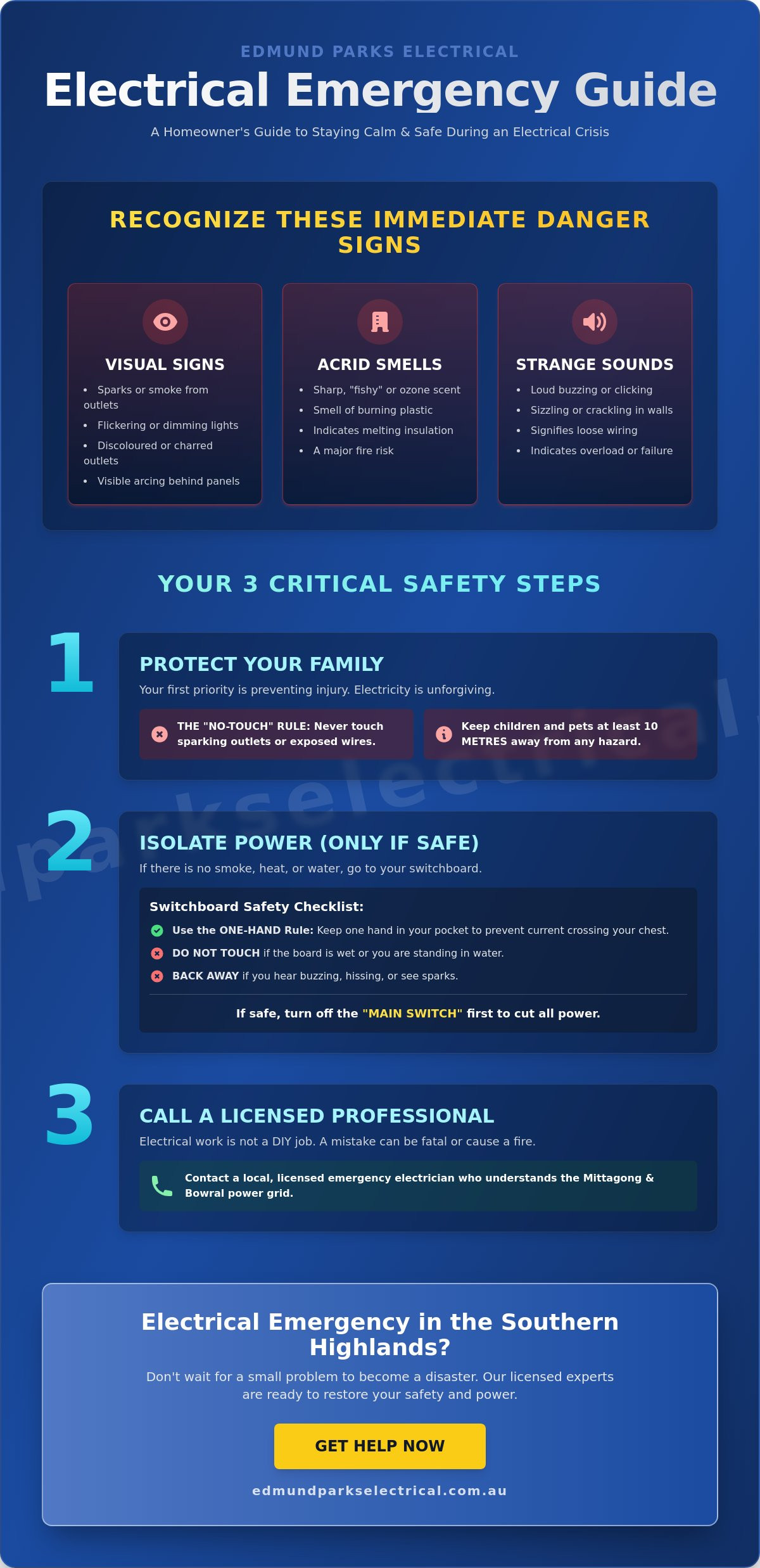
Your nose is often the best tool for detecting hidden electrical faults. A "fishy" smell or the sharp scent of ozone usually indicates that plastic insulation is melting or burning. This is a massive red flag. If you notice discoloured or charred power points, the internal connections are likely failing and generating extreme heat. This is not just a cosmetic issue; it is a fire waiting to happen. Arcing is a high-voltage jump of electricity between two conductors that creates intense heat and can ignite nearby building materials instantly. If you see sparks or smoke coming from any outlet, turn off the power at the main switch if it is safe to do so and call for help.
Audio Cues: Buzzing and Sizzling
Electricity is normally silent, so any new sounds from your walls or switchboard should be taken seriously. A faint, steady hum from a transformer is standard, but a loud buzzing or clicking sound from a circuit breaker indicates a mechanical failure or an overload. Sizzling or crackling sounds inside a wall are even more concerning. These noises are usually caused by loose wiring connections that are struggling to maintain a circuit. In older Bowral properties, these loose connections can lead to rapid heat build-up and eventual combustion. Following these emergency electrician tips ensures you act before a small noise turns into a major emergency. Safety is our priority, and catching these audio cues early provides the peace of mind every homeowner deserves.
Immediate Safety Protocols: What to Do Before Help Arrives
Safety is the only priority when things go wrong. When a circuit blows or an outlet sparks, your first goal is protecting the people in your home. The most critical of all emergency electrician tips is simple: never touch a live wire. Even if a cable looks "dead," it could be carrying 230 volts of lethal current. Keep children and pets at least 10 metres away from any exposed cabling or damaged appliances. Don't try to be a hero by moving wires with a broom or a stick. High voltage can track through many materials you might think are safe.
The Safe Way to Cut Power
If there is no smoke, heat, or water present, you should attempt to isolate the power. Locate your switchboard immediately. Most homes in the Southern Highlands have these on an external wall or inside the garage. It is a good idea to keep a high-powered torch in a central spot like the kitchen pantry. Don't rely on your phone light; you need your hands free and a strong beam to see clearly.
When you reach the board, follow these steps to stay safe:
- The One Hand Rule: Keep your non-dominant hand in your pocket. Use your other hand to flip the switches. This prevents electricity from travelling through your chest if there is a grounding fault.
- Check for Moisture: If the switchboard is wet or if you are standing in a puddle, do not touch it.
- Listen for Noise: Back away if you hear loud buzzing, hissing, or see active sparking behind the panel.
If the board looks safe, turn off the "Main Switch" first. This cuts power to the entire property. Once the power is off, wait for your Mittagong emergency sparky to arrive with the correct testing gear to find the fault.
Fire Safety and Evacuation
Electrical fires behave differently than wood or paper fires. You must never use water to extinguish them. Water is a conductor; using it on a live electrical fire can lead to severe electrocution. According to Fire and Rescue NSW, roughly 40% of home fires are caused by electrical faults or appliance failures. These situations escalate fast.
Only use a Class E fire extinguisher if you have one and feel confident using it. If smoke is visible or the smell of burning plastic is strong, get everyone out of the house. Set a clear meeting point, such as the front letterbox or a specific street tree. This ensures every family member is accounted for when emergency services arrive. Following these emergency electrician tips keeps you out of harm's way while the professionals handle the technical side. If you suspect your home has outdated wiring that poses a risk, it's best to contact a local professional for a comprehensive safety audit before a crisis occurs.
Triaging Your Switchboard: Troubleshooting Without the Risk
When your power cuts out suddenly, your first instinct is usually to head straight for the switchboard. If you see a switch flipped down, your Residual Current Device (RCD) has done its job. It detected an electrical leak and cut the power to prevent a fire or a fatal shock. Before you call for help, these emergency electrician tips can help you identify the source of the problem safely. Understanding the cause helps you communicate clearly with your sparky, which is a key part of Understanding Your Electrician Quote in NSW and avoiding unexpected costs.
The Appliance Triage Method
Most nuisance tripping in Southern Highlands homes comes from a faulty appliance rather than the house wiring itself. You can find the culprit using a simple process of elimination. Start by unplugging every single device on the affected circuit. Don't just flick the wall switch; physically remove the plug from the socket. This completely isolates the device from the system. Once everything is out, try to reset the RCD at the board.
- Kettles and Toasters: Heating elements often degrade over time, causing internal shorts.
- Old Fridges: A failing compressor can pull too much current or leak electricity to the earth.
- Outdoor Water Pumps: Moisture from a heavy Bowral downpour often gets into external plug bases or motor housings.
If the switch stays up with everything unplugged, start plugging items back in one by one. When the power trips again, you've found your broken appliance. If the switch trips even when nothing is plugged in, the fault is likely hidden in your walls or the switchboard itself. This indicates a wiring issue that requires a licensed professional to rectify.
When to Stop DIY Troubleshooting
There is a thin line between being a handy homeowner and creating a hazard. If you reset a circuit breaker and it trips immediately for the third time, stop. Forcing a breaker to stay up or resetting it repeatedly causes intense heat to build up inside the switchboard. This can lead to permanent damage to the busbar or even start a fire behind the panel. It's a clear sign of a "hard fault" that requires professional diagnostic tools.
Safety is the priority. In NSW, it's illegal for anyone without an electrical license to remove the escutcheon, which is the cover plate, of a switchboard. You're dealing with live copper bars that carry enough current to be lethal. A professional safety switch installation nsw ensures your home meets current AS/NZS 3000 standards, providing a mechanical disconnect that triggers in less than 40 milliseconds to save lives. If the triage method doesn't work, give your local Mittagong sparky a call to handle the technical repairs.
Southern Highlands Hazards: Rural and Weather-Related Risks
Living in the Southern Highlands means dealing with more than just a bit of rain. Our local weather patterns and historic architecture create specific electrical risks that city dwellers rarely face. From the heritage cottages of Bowral to the sprawling paddocks of Kangaloon, safety starts with knowing what to look for. Use these emergency electrician tips to keep your property safe when the weather turns sour.
Storm Damage and Power Surges
Highlands storms often pack a punch, bringing down heavy eucalyptus branches. If a tree branch falls on your service line, stay back at least 8 meters. Never approach a downed line. These events often lead to power surges that can fry your fridge or computer in seconds. Installing a whole-house surge protector in your main switchboard is the best way to safeguard your gear. It is a small investment that prevents thousands of dollars in damage.
Watch out for brownouts. This happens when your lights dim or flicker without going out completely. It signals a significant drop in voltage. This is dangerous for motors in your washing machine or bore pump. If you notice this, turn off your major appliances immediately. These emergency electrician tips help prevent permanent motor burnout during volatile weather events.
Rural Property Electrical Safety
Property owners in High Range or Kangaloon face unique challenges with acreage maintenance. You must maintain a minimum 2.5-meter clearance for overhead lines on your land. Overgrown trees are a major fire risk during the dry season. We often see "home-made" wiring in rural sheds that lacks proper earthing. This is a 240V death trap. Never attempt DIY wiring in your workshops. It is illegal, and it voids your insurance.
- Check that all bore pumps and gate motors are weather-sealed to IP66 standards.
- Ensure outdoor power points have high-quality weather covers that aren't cracked.
- Test your safety switches every three months to ensure they trip during a fault.
Bowral’s heritage properties hold a hidden danger known as "cotton cable." Used extensively before the 1950s, this wiring features vulcanized Indian rubber insulation that turns brittle and crumbles over time. It leaves bare wires exposed inside your wall cavities. If your home hasn't been rewired in the last 60 years, it is a fire risk. For more info on modernizing these systems, check out our Local Electrician Bowral NSW guide.
Don't leave your rural property's safety to chance. If you suspect a fault in your pump system or heritage wiring, book a safety inspection with our licensed team today.
Resolving the Crisis: How to Hire a Reliable Local Electrician
When you're standing in the dark or smelling burning plastic, it's easy to call the first number you find on Google. However, effective emergency electrician tips always prioritize verification over speed. In New South Wales, every sparky must hold a valid electrical license issued by NSW Fair Trading. Before they start work, ask to see their physical or digital license. You can verify this in 30 seconds using the Service NSW public register. Hiring unlicensed labor isn't just dangerous; it can void your home insurance policy if a fire occurs later.
Local expertise matters in the Southern Highlands. Our region's grid, managed by Endeavour Energy, has specific characteristics that differ from metropolitan Sydney. A local technician understands the common issues affecting Mittagong and Bowral, from overhead line vulnerabilities during high winds to specific transformer quirks in rural pockets. This local knowledge slashes fault-finding time, which saves you money on hourly rates. For more detailed advice, check out our guide on How to Hire an Electrician in the Southern Highlands.
Essential Questions for an Emergency Sparky
When you use these emergency electrician tips to vet a contractor, you protect your property and your wallet. Get clarity on the phone to prevent surprises. Ask these three specific questions before the van arrives:
- "Are you fully insured for residential and commercial work in NSW?" A professional should carry at least A$5 million in public liability insurance to cover any accidental damage.
- "Do you carry common spare parts for switchboard upgrades on your van?" You don't want to pay for travel time while they drive to a wholesaler that's likely closed after hours.
- "Can you provide a compliance certificate for the emergency repair?" This document is your legal proof that the work meets AS/NZS 3000 safety standards.
The Edmund Parks Difference
We've built our reputation on being more than just a voice on the phone. Edmund Parks Electrical serves the Mittagong and Bowral communities with a focus on long-term safety. We don't just patch a problem and leave. Our team looks for the root cause, often recommending energy-efficient upgrades that prevent future crises. Whether you're in a heritage home in Bowral or a modern build in Mittagong, we bring the right tools and local respect to every call-out.
Don't let an electrical fault ruin your week. We provide clear communication and honest pricing for every Southern Highlands resident. Contact Edmund Parks Electrical for reliable emergency support today and get your home back to normal fast.
Secure Your Southern Highlands Home Today
Electrical faults don't wait for a convenient time to happen. Staying safe means identifying hazards like burning smells or buzzing switchboards immediately. You've now learned how to handle basic troubleshooting and why rural weather risks in Mittagong require a specific approach. These emergency electrician tips are your first line of defense against property damage and fire risks. Since 2018, we've helped Bowral homeowners navigate complex heritage wiring and rural safety issues with professional care. Our team consists of fully licensed and insured NSW electricians who prioritize your family's peace of mind above all else. We don't just fix wires; we ensure your entire system meets current Australian safety standards. Whether it's a storm-related outage or a faulty safety switch, you can rely on our local expertise to get the lights back on safely. Your safety is our priority, and we're always ready to help our neighbors when things go wrong.
Frequently Asked Questions
What is the very first thing I should do in an electrical emergency?
Your first priority is to turn off the main power switch at your switchboard if it's safe to reach. This immediately stops the flow of electricity to the fault and prevents further damage or injury. Once the power is isolated, call a fully licensed professional. These emergency electrician tips are designed to keep your family safe while you wait for a local expert to arrive and assess the situation.
How can I tell if a smell is an electrical fire or just a dusty heater?
An electrical fire typically produces a sharp, acrid smell similar to burning plastic or fish, whereas a dusty heater smells earthy or like singed hair. If you notice a "fishy" odor coming from an outlet, it's likely a sign of melting components. Don't take chances with your home. Turn off the power and call us immediately to prevent a fire that could destroy your property in under 5 minutes.
Is it safe to reset my safety switch if it trips during a storm?
You can try to reset the safety switch once, but if it trips again immediately, leave it off. Persistent tripping during a storm often indicates a lightning strike or water ingress in your external wiring. Australian safety standards require these switches to trip within 0.03 seconds to prevent fatal shocks. If your switch won't stay up, you need a professional fault finding service to identify the moisture entry point.
Do emergency electricians in the Southern Highlands charge extra for after-hours calls?
Most licensed electricians in Mittagong and Bowral charge a premium for service calls made outside standard business hours, which are typically 7:00 AM to 4:00 PM. This higher rate covers the immediate dispatch of a technician and the convenience of 24/7 availability. While we don't list specific internal rates here, you'll find that professional emergency services provide a clear quote before starting any urgent repairs to ensure there are no surprises.
Can I use a normal fire extinguisher on an electrical fire?
Never use water or a standard foam extinguisher on an electrical fire because water conducts electricity and will cause a severe shock. You must only use a Class E extinguisher, which is specifically rated for electrical risks. These are usually identified by a white band on the cylinder. If you don't have a Class E extinguisher handy, evacuate everyone from the building immediately and call 000 from a safe distance.
What should I do if a power line has fallen near my property in Bowral?
Stay at least 8 metres away from any downed power lines and keep others clear of the area. Fallen lines can energise the ground around them, creating a lethal hazard. Call Endeavour Energy on 131 003 immediately to report the danger. After the network provider makes the area safe, you may need a licensed sparky to repair the connection point or "point of attachment" on your house.
How do I know if my switchboard is outdated and dangerous?
If your switchboard still uses ceramic wire-in fuses instead of modern circuit breakers, it's outdated and potentially dangerous. Most switchboards have a functional lifespan of about 25 years before components begin to degrade. Modern Australian regulations require RCDs on all light and power circuits to prevent electrocution. If your board looks like a relic from 1985, it's time for an upgrade to ensure your home meets current safety standards.
Why are my lights flickering when it is windy outside?
Flickering lights during high winds usually indicate a loose connection in the overhead service lines where they connect to your house. This "point of attachment" can wear down over time, and wind movement causes the connection to arc. Following these emergency electrician tips can help you identify the issue, but this specific problem requires urgent attention. A loose neutral wire is a fire risk and can cause power surges that fry your appliances.


