Is your heritage Exeter home actually protected, or is your old switchboard just waiting for a single faulty appliance to cause a disaster? Many homeowners in the Southern Highlands assume their old circuit breakers provide total safety, but they don't offer the life-saving protection of a modern safety switch. As of 2026, NSW regulations require RCDs on all residential power and lighting circuits. Professional RCD safety switch installation Exeter is no longer just a recommendation. It's a legal necessity to avoid heavy fines and ensure your family stays safe from electrical shocks.
You likely care more about peace of mind than reading through the dense AS/NZS 3000 wiring rules. It's stressful worrying if your older wiring can handle modern gadgets or if you're meeting the new digital compliance standards starting 1 July 2026. This article will show you exactly how to secure your property against electrical fires and shocks. We'll cover the mandatory shift to Type A switches, the importance of 30-millisecond trip times, and how to stay on the right side of the law with the new BCNSW eCert portal. You'll gain a clear path toward a safe, compliant home supported by a reliable local expert.
Key Takeaways
- Learn why RCDs are your home's essential defense against fatal shocks and how they offer protection that standard circuit breakers simply can't provide.
- Stay ahead of 2026 NSW regulations that now mandate safety switches on every residential circuit, including your home's lighting.
- Ensure your property meets strict AS/NZS 3000 standards with professional RCD safety switch installation Exeter tailored for Southern Highlands heritage homes.
- Understand the safety audit process required to identify old wiring risks and how modern switchboard upgrades keep your family secure.
- Prepare for the July 2026 digital compliance shift to ensure all your electrical work is legally lodged through the BCNSW eCert portal.
Understanding RCD Safety Switches: Your Exeter Home’s First Line of Defence
You’ve likely seen the "Test" button on your switchboard. That little button is the gateway to your home's most vital safety feature. A safety switch, also known as an RCD, monitors the flow of electricity through your circuits. It's looking for any sign that power is leaking where it shouldn't, like through a person or a damp wall. For many heritage properties in the Southern Highlands, understanding What is a Residual-Current Device (RCD)? represents the difference between a minor glitch and a fatal accident.
Unlike a standard fuse or circuit breaker, which only protects your wiring from melting, an RCD protects people. Old Exeter homes often rely on porcelain fuses that only "blow" when a massive surge occurs. By then, it's often too late to prevent a fire or a severe shock. Professional RCD safety switch installation Exeter ensures your home is equipped with modern sensors that act before the danger escalates. Many local properties still have old switchboards that can't detect modern electrical faults, leaving families vulnerable to risks they don't even know exist.
How a Safety Switch Actually Saves Lives
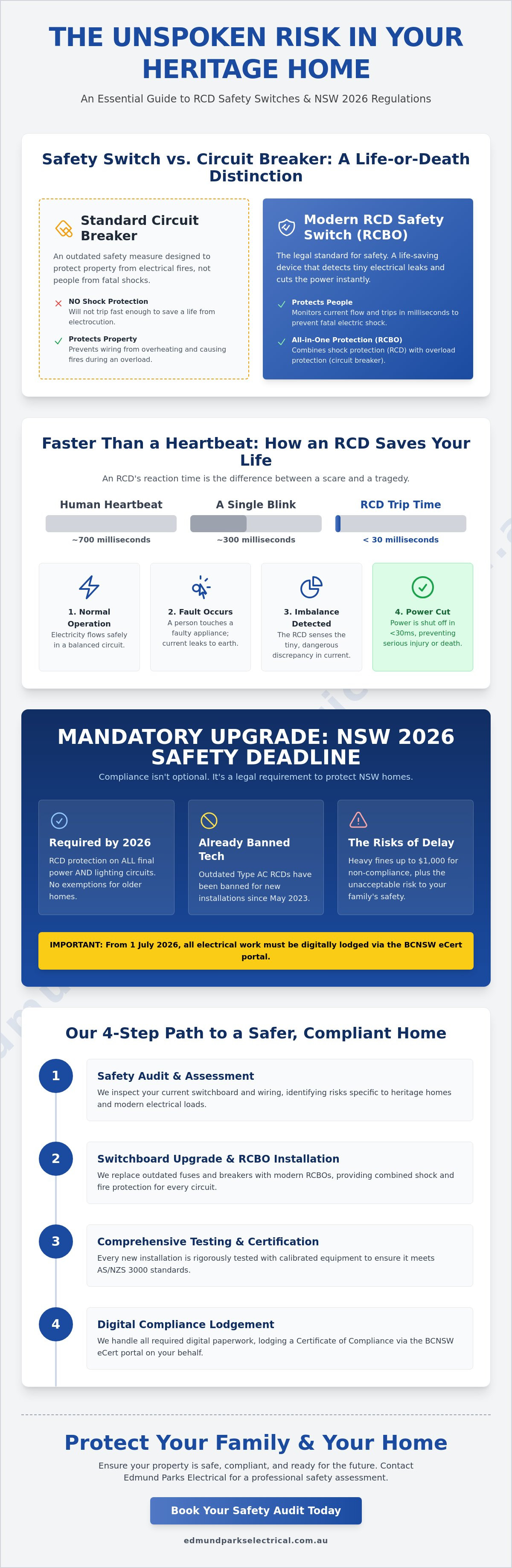
Safety switches work on a simple balance. They measure the current going into a circuit and compare it to the current coming back. If there's a discrepancy, it means electricity is leaking to the ground. An RCD is a device that shuts off power within 300 milliseconds of detecting a fault. While that sounds fast, the current 2026 standards are even stricter. Modern units are designed to cut power in less than 30 milliseconds. This is faster than a human heartbeat. It's this split-second response that prevents electricity from causing permanent nerve damage or cardiac arrest.
RCD vs. RCBO: Choosing the Right Protection
When we handle a switchboard upgrade, we often talk about RCBOs. This stands for Residual Current Breaker with Overload protection. It's essentially a high-tech hybrid. It combines the shock protection of an RCD with the overload protection of a circuit breaker. This dual-action technology is the preferred choice for modern Southern Highlands homes.
- Individual Circuit Control: If a faulty toaster trips the kitchen circuit, your lights and fridge stay on.
- Modern Compliance: Since the ban on Type AC RCDs in May 2023, these units ensure you meet the latest AS/NZS 3000 requirements.
- Space Saving: They fit easily into the compact switchboards found in many older Highlands cottages.
Opting for RCBOs during your RCD safety switch installation Exeter provides a more resilient electrical system. You won't face a total blackout just because a single light bulb blew. It keeps your essential appliances, like the fridge or your home office setup, running while isolating the specific fault. This level of precision is exactly what a busy Exeter household needs for both safety and convenience.
NSW Electrical Safety Regulations and Mandatory RCD Compliance in 2026
Staying on top of electrical laws in NSW can feel like a full-time job. The AS/NZS 3000 Wiring Rules, often called the "Bible" of the industry, set the benchmark for every sparky in the country. In 2026, these rules are stricter than ever. It's no longer enough to have a single safety switch for the whole house. Current regulations mandate that RCD protection must be installed on all final sub-circuits. This includes your power points and your lighting. If you're living in one of Exeter's beautiful older estates, you can't rely on "grandfathered" exemptions anymore. Any time a circuit is modified or a switchboard is touched, the entire system must be brought up to modern standards.
Selling a home in the Southern Highlands also triggers specific legal requirements. NSW Fair Trading and local conveyancing rules often require a property to meet current safety standards before a title transfer. Relying on outdated Type AC switches is a major risk, as these have been banned for new installations since May 2023. If your home still uses these, you could face fines of up to $1,000. This is why SafeWork NSW explanation of RCDs emphasizes the need for professional testing and correct device selection. A professional RCD safety switch installation Exeter ensures your property isn't just safe; it's legally bulletproof during a sale.
Compliance for Landlords and Property Managers
Landlords have a massive responsibility under the Residential Tenancies Act. You're legally required to ensure the electrical installation is safe. This means regular testing of safety switches and keeping detailed records. From 1 July 2026, all compliance forms must be lodged through the BCNSW eCert portal. Paper forms are officially a thing of the past. If a tenant suffers a shock and you don't have a valid Certificate of Compliance for Electrical Work (CCEW), your landlord insurance will likely be void. It's a high price to pay for skipping a simple safety check.
Safety Standards for Rural and Outbuilding Wiring
Exeter isn't just about cozy cottages; it's a region defined by workshops, sheds, and bore pumps. These rural circuits face unique challenges like dampness and dust. AS/NZS 3000 requires specific RCD sensitivities for exterior circuits to prevent "nuisance tripping" while maintaining life-saving protection. An unprotected bore pump or a damp garden shed is a recipe for disaster. Ensuring your outbuildings are part of your RCD safety switch installation Exeter project is the only way to protect your equipment and your family. If you're unsure if your shed meets the 2026 code, it's worth booking a local switchboard upgrade to check your rural infrastructure.
Safety Switches vs. Circuit Breakers: Why Exeter Properties Need Both
A common mistake I see in Exeter is homeowners thinking their old circuit breakers protect them from electrocution. They don't. It's a dangerous misconception. Circuit breakers are designed solely to protect your house from burning down. They trip when too much power flows through a wire, preventing the copper from melting and starting a fire. An RCD, however, is there to save you. It detects tiny leaks of electricity and shuts off power before you feel a thing. Investing in professional RCD safety switch installation Exeter means you're adding that specific layer of human protection to your property.
Think of them as a tag team for your home's safety. One watches the infrastructure while the other watches your family. A modern switchboard upgrade in Bowral or Exeter isn't complete without both components working in tandem. If you're still relying on old porcelain fuses, you're operating with technology that belongs in a museum, not a modern home. Fuses are slow and unreliable. They only "blow" after a massive surge has already occurred, which is often too late to prevent injury or property damage.
What Happens During an Electrical Fault?
To understand why you need both, look at two common scenarios. In Scenario A, a nail goes through a wire in your wall, creating a short circuit. A massive surge of energy rushes through the line. Your circuit breaker detects this heat and flips, saving your walls from catching fire. In Scenario B, you're using a toaster with a frayed cord and touch the metal casing. Electricity tries to flow through you to the ground. This is earth leakage. A standard circuit breaker won't even notice this small leak. Only an RCD will trip in time to stop your heart from stopping. Relying on old fuses in heritage Highlands homes is a gamble you don't want to take.
Identifying Your Current Protection
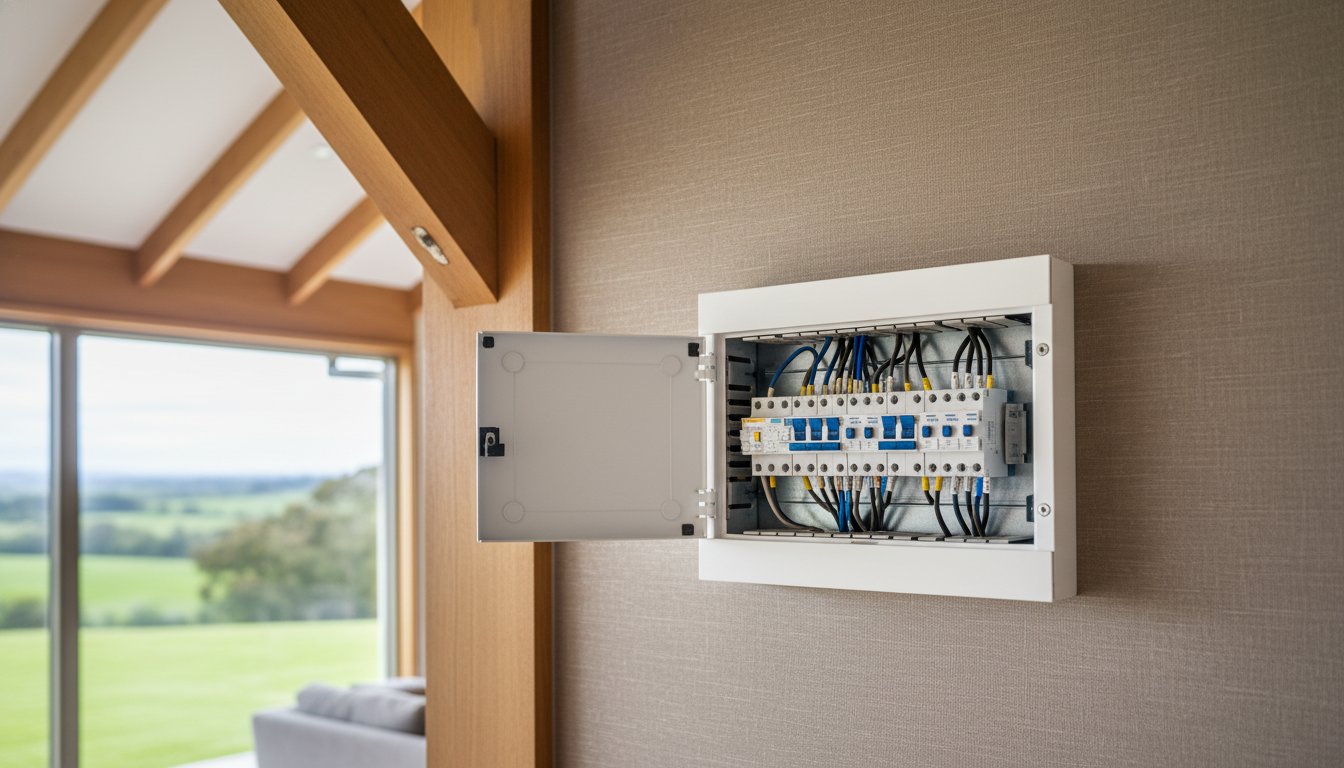
You can check your own level of safety in about ten seconds. Open your switchboard and look at the switches. If you see a row of switches without a "Test" or "T" button, you likely only have circuit breakers. Every genuine safety switch must have a test button. Modern RCBOs are slim and look almost identical to breakers, but they still feature that vital button. If your Exeter home lacks these buttons, you're operating without a safety net. It's a clear signal that your home doesn't meet the 2026 safety standards. Checking this today gives you the peace of mind to know exactly where your home stands.
The RCD Installation Process: What to Expect from a Southern Highlands Electrician
Your journey to a safer home starts with a thorough safety audit. We don't just swap parts; we analyze how your home breathes electrically. When you book an RCD safety switch installation Exeter, the process begins by inspecting your existing switchboard and house wiring. Many Exeter properties still feature original wiring that may not be compatible with modern high-sensitivity devices. We identify these bottlenecks early to ensure your new safety switches won't just trip constantly due to underlying issues.
The physical installation involves integrating new RCBOs or RCDs directly into your electrical panel. We customize the layout to balance safety with circuit reliability. This means we avoid putting too many appliances on a single switch. This strategic approach prevents "nuisance tripping," where a small leak from an old kettle knocks out the power to your entire home office. Once the devices are in place, we perform rigorous testing to verify they cut power in the required 30-millisecond window. You'll receive a digital Certificate of Compliance for Electrical Work (CCEW) to prove your home meets the 2026 standards.
Addressing Heritage and Older Wiring Challenges
Exeter's heritage properties often hide brittle rubber insulation or "daisy-chained" circuits that modern safety switches will immediately reject. This is actually a good thing. If a new safety switch keeps tripping, it's often revealing a hidden wiring fault that could have caused a fire. Our professional diagnostics go beyond simple compliance. We use specialized insulation resistance testers to find exactly where the leak is occurring. This ensures your home isn't just "legal" on paper but is genuinely safe for your family to live in. If you're worried about your older switchboard, it’s time to talk to a local expert about a professional Safety Switch Installation.
Testing and Maintenance for Long-Term Safety
Installing the switch is only half the battle. You need to know it will work when it matters most. We recommend the "Push Button" test every six months. It's simple: press the 'T' or 'Test' button on the device. If the power flips off instantly, the internal mechanism is moving freely. If it sticks or feels "mushy," the device has failed and needs urgent replacement. For commercial sites or rental properties in the Highlands, we perform professional RCD injection testing. This uses a specialized meter to simulate a real-world fault, measuring the exact trip time down to the millisecond. This level of precision is the only way to guarantee 100% protection against fatal shocks.
Expert RCD Safety Switch Installation in Exeter with Edmund Parks Electrical
Choosing the right professional for your home's electrical safety isn't just about finding a licensed sparky. It's about finding someone who understands the specific quirks of Southern Highlands properties. At Edmund Parks Electrical, we've built our reputation on being more than just contractors; we're your local neighbours. We know that an RCD safety switch installation Exeter requires a different approach than a standard city job. Whether you're managing a sprawling rural estate or a historic cottage near the village centre, we bring the right tools and the right attitude to every switchboard we touch.
Our commitment to your safety is backed by strict adherence to the AS/NZS 3000 Wiring Rules. We don't cut corners because we know the stakes are too high. We provide clear, transparent communication from the first phone call to the final digital lodgement of your compliance certificate. You won't find any technical jargon used to hide hidden costs here. Instead, you'll get direct advice on how to keep your family safe and your property fully compliant with the 2026 NSW electrical standards. We take pride in offering high-quality electrician services across the Southern Highlands, ensuring every client feels heard and protected.
The Edmund Parks Difference: Local Reliability
We live and work in this community. This gives us a deep understanding of the unique electrical challenges faced by Exeter residents, from fluctuating rural power grids to the delicate nature of heritage wiring. We don't just install a device and leave. We provide a comprehensive safety solution. This includes checking your grounding systems and ensuring your switchboard is capable of handling modern energy demands. Our focus is always on your peace of mind. We provide honest assessments and reliable workmanship that stands up to the toughest safety audits.
Ready to Secure Your Home?
Securing your property doesn't have to be a stressful experience. We've streamlined our process to make your RCD safety switch installation Exeter as simple as possible. You can start by reaching out for an obligation-free quote tailored to your specific property needs. Our service area is broad, covering everything from Mittagong and Bowral to Sutton Forest and Exeter. We're ready to help you navigate the 2026 compliance landscape with ease.
- Switchboard Upgrades: Modernise your electrical hub for better safety and performance.
- Rural Electrical Services: Expert care for sheds, pumps, and outbuildings.
- Safety Switch Installation: Precision fitting of Type A and Type B RCDs.
- Power Points and Lighting: Ensuring every circuit in your home is protected.
Don't wait for a fault to find the weaknesses in your wiring. Contact Edmund Parks Electrical today to book your local safety check. Let’s make sure your Exeter home is a safe haven for years to come.
Secure Your Southern Highlands Home with 2026-Compliant Protection
Electrical safety isn't something you can afford to leave to chance, especially with the strict 2026 NSW regulations now in full effect. You've seen how modern safety switches provide a critical layer of defense that standard fuses simply can't match. By choosing a professional RCD safety switch installation Exeter, you're not just ticking a legal box. You're ensuring your heritage estate or rural property remains a safe haven for your family. Modern Type A and B devices are now the standard, and staying compliant is the only way to protect your insurance and your peace of mind.
As a fully licensed NSW electrician and specialist in Southern Highlands heritage and rural properties, I understand the unique challenges of our local wiring. Every installation we perform comes with a formal compliance certification, giving you the legal protection you need. Don't wait for a dangerous fault to reveal a weakness in your system. Book your Exeter RCD safety check with Edmund Parks Electrical today and enjoy the peace of mind that comes from true professional reliability. Your home's safety is our priority, and we're here to make the upgrade process straightforward and stress-free.
Frequently Asked Questions
Is a safety switch the same as a circuit breaker?
No, they perform two completely different jobs. A circuit breaker is designed to protect your home's wiring from overheating and catching fire by cutting power during a massive surge. A safety switch, or RCD, is designed to protect you from electrocution by detecting tiny leaks of electricity. You can tell them apart because a safety switch always has a "Test" button on the front.
How many RCDs do I need in my Exeter home to be legal?
Current AS/NZS 3000 standards require RCD protection on all final sub-circuits, including both power points and lighting. For a standard Exeter property, this typically means having multiple RCDs or RCBOs installed. This setup ensures that a fault in one room doesn't plunge your entire house into darkness. It's about balancing legal compliance with household convenience.
Why does my safety switch keep tripping even when nothing is plugged in?
This often indicates a "hard fault" in your home's fixed wiring or moisture inside an outdoor power point. In many heritage Southern Highlands homes, old insulation can become brittle and leak electricity to the ground. Because an RCD monitors the entire circuit, it will trip to prevent a fire or shock even if your appliances are unplugged. It's a signal that your wiring needs a professional diagnostic check.
Are safety switches mandatory for all homes in NSW in 2026?
Yes, safety switches are mandatory for all new electrical installations and any time an existing circuit is modified. If you are selling or renting out your property in the Southern Highlands, you are legally obligated to ensure the electrical system is safe. Professional RCD safety switch installation Exeter ensures your home meets these strict 2026 standards and keeps your insurance valid.
Can I install an RCD safety switch myself to save money?
Absolutely not. It's illegal for anyone but a licensed electrician to perform electrical work in NSW. Attempting a DIY installation is extremely dangerous and can lead to fatal shocks or house fires. Beyond the physical risk, unlicensed work will void your home insurance policy and can result in significant fines from NSW Fair Trading.
How often should I test the safety switches in my switchboard?
You should perform a "push button" test on your safety switches every six months. This simple check ensures the internal mechanical parts are moving freely. Just press the "T" or "Test" button; the switch should flip off instantly. If it doesn't trip immediately, the device is faulty and requires an urgent replacement by a professional electrician.
What is the cost of RCD safety switch installation in the Southern Highlands?
The investment for a professional installation depends on the age of your switchboard and how many circuits need protection. Older homes with heritage wiring or porcelain fuses may require a more extensive switchboard upgrade to accommodate modern safety devices. We provide clear, honest assessments to ensure your RCD safety switch installation Exeter is done correctly and safely.
Do RCDs protect against power surges or lightning strikes?
No, RCDs are specifically designed to detect earth leakage faults and prevent electrocution. They don't offer protection against high-voltage surges from lightning or grid fluctuations. To protect your LED lighting and expensive electronics, you need a dedicated Surge Protection Device (SPD) installed alongside your safety switches in the main switchboard.