
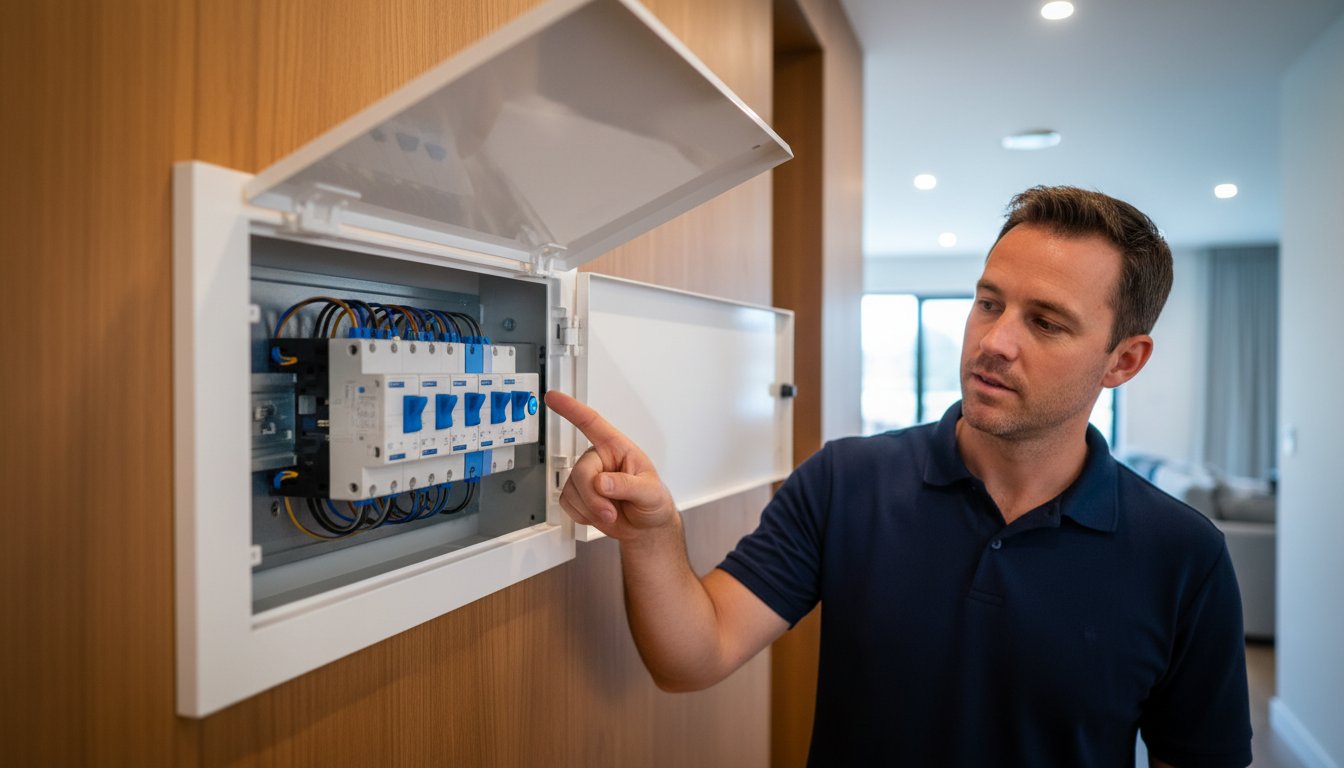
Last Tuesday, a homeowner in Bowral realized her circuit breakers wouldn't stop a fatal electric shock during a simple toaster malfunction. It's a terrifying thought, but many Southern Highlands residents still rely on outdated switchboards that lack modern protection. If your home hasn't been inspected recently, professional safety switch installation nsw is the single most important step you can take to prevent electrical fires and accidents.
We understand the confusion. Most people assume their power board is fine as long as the lights stay on, but the difference between a standard fuse and a Residual Current Device (RCD) is literally a matter of life and death. You want your family to be safe and your property to meet the 2026 NSW safety standards, but the technical jargon can be overwhelming. We're here to cut through the noise with straightforward advice from a local perspective.
This guide explains exactly how RCDs work and why they are now mandatory for all power and lighting circuits in New South Wales. We'll walk you through the simple steps to test your own switches and help you navigate the compliance requirements for selling or renting your home. By the end, you'll know exactly how to secure your property and where to find a fully licensed, reliable sparky who treats your home like their own.
Key Takeaways
- Understand why circuit breakers protect your cables while safety switches (RCDs) are the only devices that prevent deadly electric shocks.
- Ensure your property meets current AS/NZS 3000 standards with a professional safety switch installation nsw to keep your family safe.
- Master the 30-second "Push to Test" method to keep your electrical system reliable between professional inspections.
- Discover why older homes in Mittagong and Moss Vale are at higher risk and how to spot an outdated switchboard before it fails.
- Learn why safety switch work is never a DIY job and how our local experts guarantee your home is fully licensed and insured.
What is a Safety Switch? Essential Electrical Protection for NSW Homes
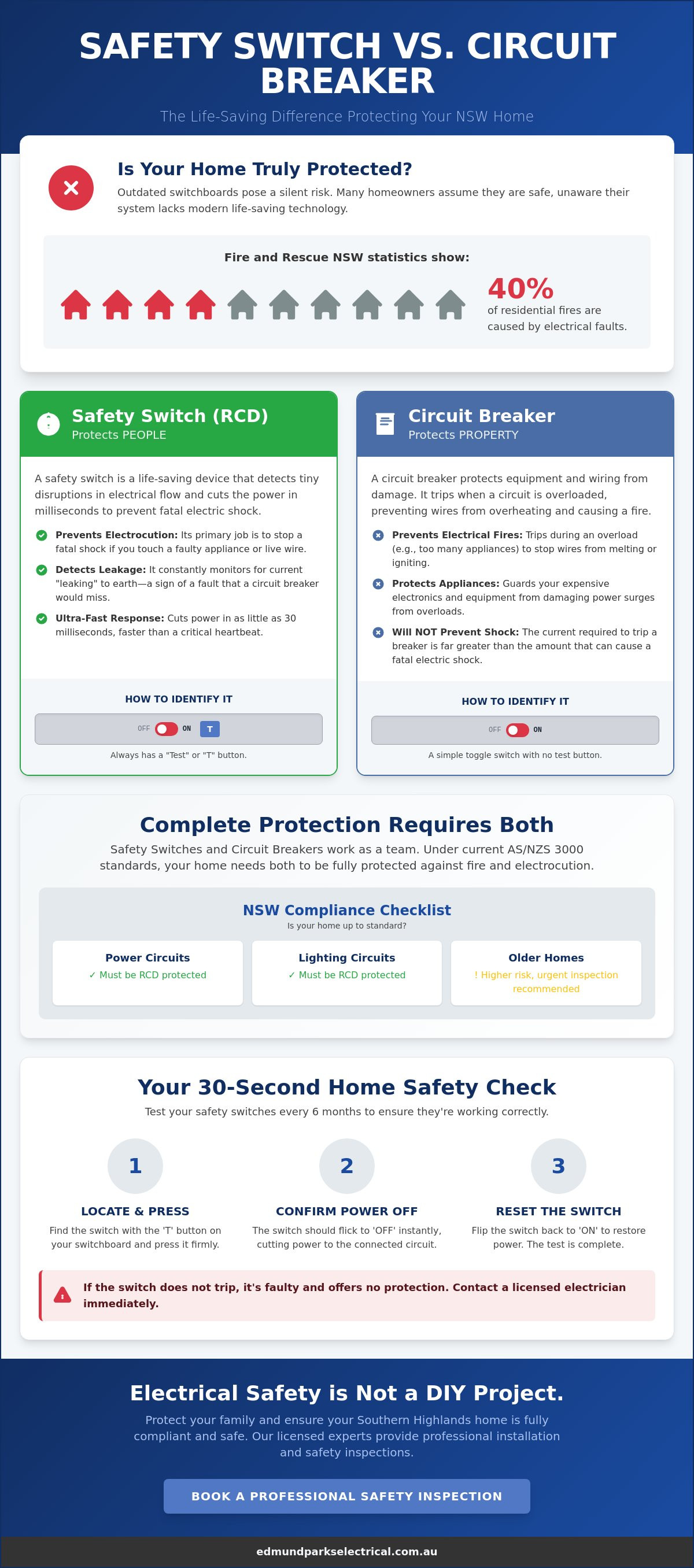
A safety switch is a sophisticated electronic device designed to monitor the flow of electricity through your home circuits. Its job is simple but life-saving. It detects any imbalance in the electrical current that might indicate power is leaking to the earth. In technical circles, we refer to this as a Residual-current device (RCD). When a leak is detected, the switch triggers and cuts the power in about 30 milliseconds. This happens so fast that the electricity doesn't have time to cause a fatal heart rhythm disruption.
At Edmund Parks Electrical, we consider these devices the silent heroes of your Mittagong home. You might go years without thinking about your switchboard, but these units are constantly on guard. Statistics from Fire and Rescue NSW show that 40% of residential fires in the state are caused by electrical faults. Investing in a professional safety switch installation NSW is the single most effective step you can take to protect your property. It provides a level of security that standard fuses or circuit breakers simply cannot match.
How a Safety Switch Saves Lives
The primary danger of electricity is its tendency to find the quickest path to the ground. If an appliance is faulty or a wire is damaged, that path could be through your body. A safety switch detects this "current leakage" immediately. Because the response time is faster than a heartbeat, it prevents the electrical current from causing cardiac arrest or severe internal burns. It also identifies "leaking" electricity caused by dampness or crushed cables behind walls, which are common culprits for house fires in older NSW properties.
RCD vs. Safety Switch: Is There a Difference?
There is no functional difference between an RCD and a safety switch. RCD is the formal industry term used by licensed electricians and regulatory bodies across Australia. Safety switch is the everyday name used by homeowners. While they do the same thing, they come in different formats. Switchboard-mounted units are the most reliable because they protect all the wiring and power points on a specific circuit. Portable RCDs are also common for people using power tools in the garage or garden, but they only protect the equipment plugged directly into them.
Choosing a licensed professional for your safety switch installation NSW ensures your home meets the latest 2026 safety standards. We don't just install a part; we provide the peace of mind that comes from knowing your family is protected by a system that's been tested and verified by a local expert who cares about the community. It's a small investment that makes a massive difference in the safety of your Mittagong household.
Safety Switch vs. Circuit Breaker: Understanding the Difference
The most common mistake homeowners make is assuming their home is safe just because the power cuts out when the kettle and toaster run at the same time. That is the circuit breaker doing its job, but it isn't protecting your life. In simple terms, circuit breakers protect your wires; safety switches protect your family. Both are essential for a legal and safe safety switch installation nsw.
Identifying which is which on your Bowral switchboard is easy. Safety switches, or RCDs, always have a small button marked "Test" or "T". If a switch lacks this button, it is likely a standard circuit breaker or an old-fashioned fuse. Under current Australian standards, having one doesn't mean you don't need the other. They work as a team to provide full protection against both electrical fires and accidental electrocution.
The Circuit Breaker: Protecting Your Property
Circuit breakers are mechanical switches designed to prevent electrical fires. They monitor the amount of current flowing through the copper cables in your walls. If you overload a circuit by plugging in too many high-wattage appliances, the wires get hot. The breaker trips to stop those cables from melting or igniting. While this prevents your house from burning down, a breaker won't stop a fatal shock. The current required to trip a standard breaker is significantly higher than the amount needed to cause cardiac arrest. If you notice nuisance tripping when using multiple appliances, it is actually a sign the breaker is doing its job by preventing a fire.
The Safety Switch: Protecting People
A safety switch, officially known as a Residual Current Device (RCD), is a life-saving tool. It detects tiny amounts of "leaking" current. This happens when electricity flows through a person or a faulty appliance toward the ground. It acts fast, cutting the power in under 30 milliseconds. This speed is what prevents a shock from becoming a tragedy. Following NSW safety switch requirements is the best way to ensure your home meets the 2026 safety benchmarks.
By 2026, every circuit in a modern home, including lights, power points, and air conditioning, requires its own RCD. If your home still relies on old ceramic fuses, you should book a switchboard upgrade Bowral to ensure your family is fully protected. Don't leave your safety to chance. If you aren't sure if your board is up to code, a quick inspection from a licensed local electrician can give you the peace of mind you need.
NSW Safety Switch Regulations: Is Your Property Compliant?
The Australian Standard AS/NZS 3000, often called the Wiring Rules, dictates the legal requirements for every safety switch installation nsw. Since the 2018 update and subsequent 2021 amendments, the rules have tightened significantly. If your home was built before 2000, you are likely living with outdated protection. Most older homes in Mittagong and Moss Vale only have RCDs on power outlet circuits, leaving lights, air conditioners, and hot water systems completely unprotected. This "Pre-2000" setup is a major safety gap that modern regulations aim to close.
Relying on a single "whole-house" safety switch is no longer considered best practice by licensed electricians. When one appliance develops a fault, a single switch shuts down every circuit in the building. This leaves you in the dark, searching for a torch in a potentially hazardous situation. Modern compliance requires multiple RCDs, or RCBOs, to ensure that a fault in the kitchen doesn't kill the lights in the hallway. It keeps your family safe and your home functional.
Compliance for Older Southern Highlands Homes
Heritage properties in Bowral are beautiful, but their electrical systems are often ticking time bombs. We frequently find original rubber or cotton-insulated wiring that has become brittle and dangerous over the last 50 years. Installing modern RCDs on these old circuits is rarely a "plug and play" job. It usually requires a full switchboard modernization to ensure the new components can actually detect faults without constant nuisance tripping. If you have rural outbuildings or sheds, these must also be brought up to code. Every circuit leading to a shed requires its own safety switch installation nsw to prevent ground faults in damp, outdoor environments.
Rental Property Standards in NSW
Landlords in the Highlands face strict obligations under the Residential Tenancies Regulation 2019. Since March 2020, electrical safety has been a "minimum standard" for a property to be considered fit for habitation. While NSW does not yet mandate a specific two-yearly testing frequency by law like Victoria, the legal risk of non-compliance is high. Property managers now recommend annual professional verification to ensure all RCDs trip within the required 300 milliseconds. If a tenant is injured due to a faulty switch, the landlord can be held liable for massive damages. We provide digital compliance certificates to prove you have met your duty of care and kept your investment safe.
How to Test Your Safety Switch and When to Book an Installation
A safety switch is your home's most vital defense against electrical tragedy. However, even the best safety switch installation NSW residents invest in isn't a "set and forget" solution. These mechanical devices can seize up over time if they aren't exercised. Dust, moisture, and internal wear can prevent the mechanism from tripping when you need it most. To ensure your family stays protected, you must perform a 30-second "Push to Test" check every three to six months. Mark your calendar or set a recurring phone reminder for the first day of every new season.
Step-by-Step DIY Testing Guide
Testing your RCD is straightforward and requires no tools. Before you begin, warn everyone in the house that the power will go out for a moment. You don't want to crash a computer or interrupt someone mid-shower. Locate your switchboard and look for the device with a small button marked with a "T" or the word "Test."
- Press the button: The switch should immediately flip to the "Off" position with a loud click.
- Verify power loss: Check that the lights or appliances on that circuit have actually turned off.
- Reset the switch: Flip the toggle back to the "On" position to restore power.
If the switch doesn't trip when you press the button, or if it won't stay in the "On" position when you try to reset it, you have a serious fault. You should contact a professional immediately to discuss a replacement or a new safety switch installation NSW compliant upgrade.
When Nuisance Tripping Becomes a Problem
It's frustrating when your power cuts out while you're making toast. This is often called "nuisance tripping," but it's usually your RCD doing its job. Common culprits include faulty kettles, moisture trapped in outdoor garden lights, or old appliances with degraded internal insulation. If your switch trips, try unplugging everything on that circuit and plugging them back in one by one to find the offender.
If the tripping continues even with all appliances disconnected, the issue is likely in your permanent wiring. This isn't a DIY job. You need to know how to hire an electrician Southern Highlands homeowners can rely on for expert fault finding. A licensed Mittagong electrician has the specialized insulation resistance testers required to pinpoint the leak without tearing your walls apart.
Don't ignore a switch that keeps tripping. It's a clear signal that something is wrong. Whether it's a failing RCD or a dangerous wiring fault, getting a professional assessment is the only way to guarantee your peace of mind. If your switchboard looks outdated or the test button fails to respond, contact our team for a professional safety switch inspection today.
Professional Safety Switch Installation in Bowral and Mittagong
Under the NSW Home Building Act 1989, electrical work is strictly regulated to protect homeowners. Attempting a DIY safety switch installation nsw isn't just dangerous; it's illegal. You risk a fine of up to A$22,000 as an individual if you're caught performing unlicensed electrical work. At Edmund Parks Electrical, we follow a rigorous process that goes beyond simple replacement. We don't just swap a part. We conduct deep fault finding and circuit testing to ensure your home's wiring can handle the new RCD protection. This is vital for older properties in the Southern Highlands where legacy wiring might trigger "nuisance tripping" if not handled correctly by a professional.
Our team often combines these safety upgrades with other essential tasks. For example, we can integrate your RCDs with a power point installation Mittagong homeowners frequently request for modern, high-draw appliances. Booking your 2026 electrical safety audit with a local expert is the smartest move you can make this year. Our comprehensive checks look beyond the surface to find hidden risks in your switchboard. We check for loose connections, overheating components, and outdated fuses that belong in the last century. This proactive approach ensures your safety switch installation nsw is backed by a system that actually works when you need it most.
Why Choose a Local Southern Highlands Sparky?
Our team knows the specific challenges of regional NSW homes. Whether you own a weather-exposed switchboard in rural Moss Vale or a heritage-listed cottage in Bowral, we understand the local council requirements and regional property types. We provide prompt, reliable service for Mittagong and all surrounding villages. Most importantly, we issue a Certificate of Compliance for Electrical Work (CCEW) for every job. Your home insurance provider will likely require this document if you ever need to make a claim. Without it, you could be left unprotected financially and legally.
Peace of Mind for Your Family
A safety switch is a small investment that prevents catastrophic electrical fires and fatal shocks. It monitors the flow of electricity and cuts power in as little as 0.03 seconds if a leak is detected. Don't wait for a fault to happen before you act. Being proactive about your home's electrical health is the best way to protect your family and your property value. We recommend a full electrical safety audit every two years to ensure your RCDs are functioning perfectly and meeting current Australian Standards. Contact Edmund Parks Electrical for a safety switch check today. We'll make sure your Southern Highlands home remains a safe haven for years to come.
Secure Your Family’s Future with Modern Electrical Protection
Staying ahead of NSW safety regulations is essential for every homeowner in 2026. A modern RCD does more than just stop a circuit; it provides a vital layer of defense against shocks and electrical fires. Since 2018, our team has specialized in heritage home switchboard upgrades across the Southern Highlands, ensuring even the oldest properties meet current standards. We know the local Mittagong and Bowral landscape, providing the reliable expertise you need to keep your family safe.
Choosing a professional safety switch installation nsw ensures your system is tested and guaranteed to perform when it matters most. As a fully licensed and insured NSW electrician, we take the guesswork out of compliance. We've spent years building a reputation for honest, no-nonsense service that puts your peace of mind first. Don't wait for an emergency to find out if your breakers are working. It's time to bring your home up to speed with a quick, professional check-up.
Ensure your home is safe, book a professional safety switch installation with Edmund Parks today.
We're ready to help you create a safer home for years to come.
Frequently Asked Questions
Is it a legal requirement to have a safety switch in NSW?
Yes, it's a legal requirement for all new homes and any property undergoing major electrical renovations in NSW. Under the AS/NZS 3000:2018 Wiring Rules, every circuit in a domestic residence must be protected by a safety switch. If you're renting out a property, NSW Fair Trading requires landlords to ensure the premises are safe, which often necessitates a safety switch installation NSW residents can rely on to meet modern safety standards.
How many safety switches do I need for a standard 3-bedroom home?
You need at least one safety switch for every individual circuit in your home. For a standard 3-bedroom house, this typically means installing 4 to 8 RCDs to cover lights, power points, air conditioning, and oven circuits. Having multiple switches prevents a single fault from plunging your entire house into darkness. It's much safer than the old method of using one master switch for the whole board.
Why does my safety switch keep tripping when it rains?
Moisture entering outdoor power points, garden lights, or external appliances is the most common cause. Rainwater can seep into weathered electrical casings, causing a current leak that triggers the RCD instantly. Statistics show that roughly 15 percent of nuisance tripping stems from outdoor electrical faults during wet weather. You should check your exterior fittings for cracks or call a licensed sparky to seal any exposed entry points.
Can I install a safety switch myself if I bought it from a hardware store?
No, you cannot install a safety switch yourself as it's illegal for anyone but a licensed electrician to perform fixed electrical wiring work in Australia. Under the NSW Home Building Act 1989, DIY electrical work carries fines of up to A$22,000 for individuals. Even if you bought the part at a hardware store, you must hire a professional. We provide a Certificate of Compliance for Electrical Work to guarantee the job meets state regulations.
What is the average lifespan of a safety switch in Australia?
A high-quality safety switch typically lasts between 10 and 15 years before the internal mechanical components begin to wear out. The Australian Standard recommends testing your RCDs every 6 months using the "test" button to ensure they still trip within 40 milliseconds. If your switchboard is more than 20 years old, the components are likely past their prime and require an urgent safety switch installation NSW wide to maintain protection.
Do safety switches protect against lightning strikes?
Safety switches don't protect your appliances from lightning strikes or voltage spikes. Their sole job is to detect a leak in electrical current and shut off the power to prevent human electrocution. To guard your expensive electronics against a 30,000-ampere lightning bolt, you need a dedicated surge protection device installed alongside your RCDs. Combining both devices provides the most comprehensive electrical defense for your NSW home.
What should I do if my safety switch won’t stay in the "on" position?
You should immediately unplug every appliance on that specific circuit and try to reset the switch. If the switch stays up, plug your items back in one by one until it trips again to find the faulty device. If it won't stay on even with everything unplugged, you have a hard-wired fault or a broken switch. Don't force the lever up; call a licensed electrician to perform a professional fault find.
Is a safety switch the same as a surge protector?
No, a safety switch is designed to save lives while a surge protector is designed to save equipment. A safety switch monitors the balance of electricity and cuts power in 0.03 seconds if it detects a leak that could cause a shock. Surge protectors manage sudden increases in voltage from the grid or lightning strikes. For total peace of mind, your switchboard should ideally feature both types of protection to cover all bases.


