In Sutton Forest, a tripping safety switch is often a symptom of our region’s unique rural moisture and aging infrastructure rather than just a faulty toaster. It's a frustrating reality when your power cuts out right in the middle of a family dinner or a critical work deadline. If your safety switch keeps tripping Sutton Forest homes and businesses often face these sudden blackouts due to environmental factors that suburban switchboards rarely encounter. While it's tempting to just flip the switch back on, a recurring trip is your system's way of telling you something is wrong.
We know how stressful it is to sit in the dark, worrying about electrical fires or the potential cost of an emergency call-out. It's confusing to pin down which appliance is the culprit, especially when you're just trying to get through your day. This article will help you discover the common causes of tripping safety switches and teach you how to safely diagnose the issue before you need a professional. You'll learn how to identify faulty devices and understand when a switchboard upgrade is necessary to keep your property compliant with the latest Australian wiring rules.
Key Takeaways
- Master a simple diagnostic routine to identify which specific appliance is cutting your power without needing to call an electrician immediately.
- See how the unique rural environment means your safety switch keeps tripping Sutton Forest homes more often during weather shifts or due to garden lighting issues.
- Learn to distinguish between a safety switch trip and a circuit breaker overload so you know whether you've got a dangerous fault or just too many heaters running.
- Find out how professional tools like insulation resistance testers find hidden faults that are impossible to see with the naked eye.
- Get clear guidance on when it's time to consider a switchboard upgrade to ensure your home remains safe and compliant with current NSW electrical regulations.
Understanding Why Your Safety Switch Keeps Tripping in Sutton Forest
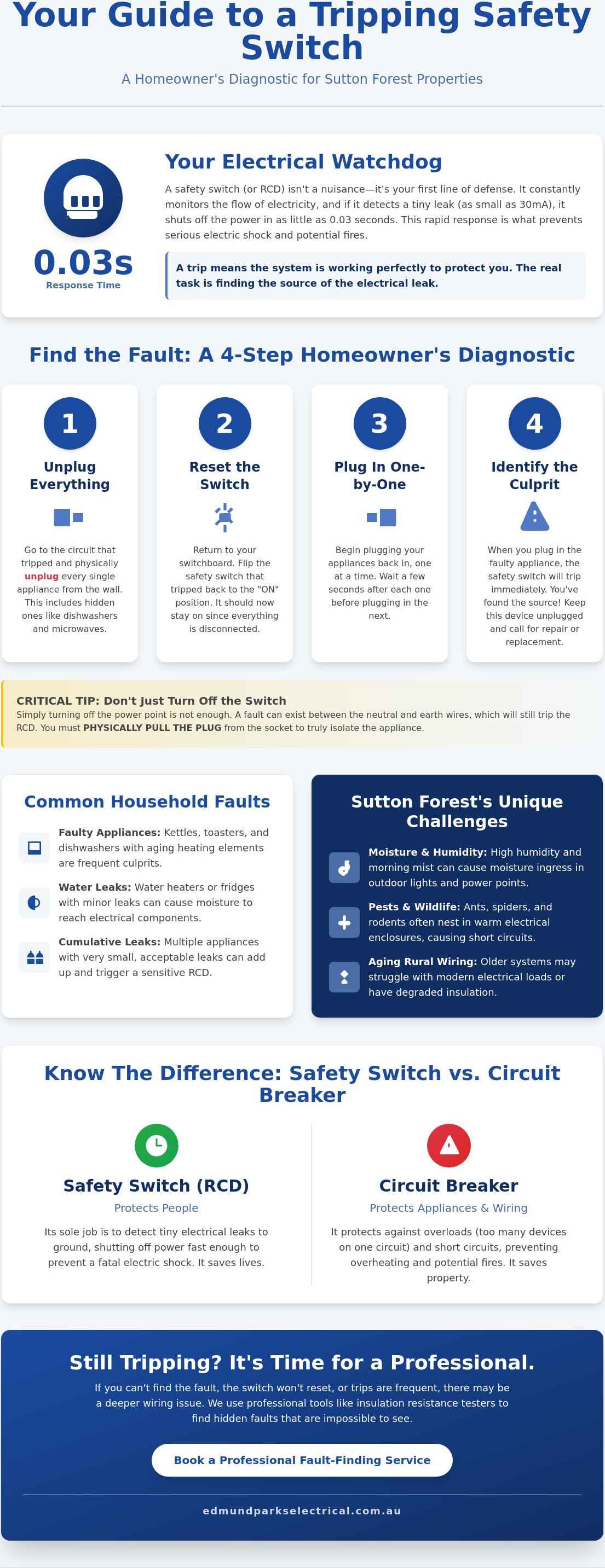
When your power cuts out suddenly, it's easy to feel frustrated. However, if your safety switch keeps tripping Sutton Forest properties are actually being protected by a highly sensitive watchdog. This device is technically known as a Residual-current device (RCD). Its primary job is to detect even the tiniest leak of electricity. If it senses current escaping where it shouldn't, it shuts off the power in as little as 0.03 seconds. This rapid response is what stands between a minor appliance fault and a fatal electric shock or a devastating house fire.
Many homeowners view a tripping switch as a failure of the electrical system. In reality, it's the system working exactly as intended. It's a safety feature, not a malfunction. If you find yourself walking to the switchboard every hour to flip the lever back up, you're ignoring a warning sign. Constantly resetting a switch without finding the root cause can eventually lead to carbon tracking or permanent damage to your home’s electrical components. Fixing the source of the leak is the only way to ensure long-term reliability.
The Role of the Residual Current Device (RCD)
An RCD works by constantly monitoring the balance of electricity flowing through a circuit. Under normal conditions, the current going out matches the current coming back. If there's a discrepancy, even a tiny one, the RCD assumes the electricity is leaking through a person or a faulty wire and cuts the circuit. Modern NSW standards now require these safety switches on all household circuits, from power points to lighting. While "nuisance tripping" can happen due to cumulative small leaks from multiple appliances, a sudden trip usually indicates a genuine electrical emergency or a hardware fault that needs immediate attention.
Why Sutton Forest Homes are Susceptible
Living in the Southern Highlands brings specific environmental challenges that impact your electrical health. The high humidity and thick morning mist common in Sutton Forest often lead to moisture ingress in outdoor fittings. Water is an excellent conductor. Even a few drops inside a garden light or a weather-exposed power point can trigger a trip. This is especially common after a heavy downpour or a particularly foggy night.
Many properties in our area also feature heritage architecture or older rural wiring. These aging systems weren't always designed for the heavy electrical loads of modern life. Additionally, local wildlife like ants and rodents frequently seek shelter in warm outdoor power points. Their presence can create bridges between wires, causing the circuit to fail. If your safety switch keeps tripping Sutton Forest's damp climate and local pests are often the hidden culprits behind the scenes.
The Homeowner’s Diagnostic: How to Find the Faulty Appliance
If your safety switch keeps tripping Sutton Forest living doesn't have to mean sitting in the dark. Most of the time, the issue isn't a complex wiring failure but a single appliance that has developed an electrical "leak." Before you worry about the cost of an emergency call-out, you can often find the culprit yourself using a systematic approach. This diagnostic process is safe, simple, and helps you provide clear information to your electrician if the problem persists.
The biggest mistake homeowners make is only turning off the power point switch. For a safety switch, this isn't enough. A fault can still exist between the neutral and earth wires even when the switch is off. To truly isolate a device, you must physically pull the plug out of the socket. This completely removes the appliance from the electrical loop and allows you to test the circuit cleanly. It's a small detail that makes a massive difference in finding the truth.
The Process of Elimination Method
Follow these steps to narrow down the cause of the trip:
- Unplug everything: Disconnect every single device on the affected circuit. This includes the "hidden" ones like the dishwasher, microwave, and any outdoor power points.
- Reset the switch: Go to your switchboard and flip the safety switch back to the "on" position.
- Plug in one by one: Return to your rooms and plug your appliances back in, one at a time.
- Observe the trip: When you plug in the faulty device, the safety switch will likely trip again immediately.
Pay close attention to items that use water or have heating elements. Kettles, old fridges, and dishwashers are the most frequent offenders. If you find the switch trips even when every single plug is pulled, the issue is likely within your permanent wiring. In that scenario, you'll need professional help with switchboard upgrades or dedicated fault-finding to restore safety and peace of mind.
Testing Your Safety Switch Correctly
Every safety switch features a "Test" or "T" button. This button is designed to simulate a fault and ensure the internal mechanism is still responsive. You should test your RCDs at least every six months. We suggest following the "Daylight Savings" rule: when you change your clocks, press the test button. If the switch doesn't trip immediately when pressed, it's a sign the component is seized or faulty. Mechanical failure is common in older units, especially in the damp conditions of the Southern Highlands, and requires a replacement to keep your family protected.
Rural Challenges: Why Sutton Forest Properties Face Unique Electrical Trips
Sutton Forest properties aren't your standard suburban blocks. They often sprawl across several acres with complex electrical needs that extend far beyond the four walls of the main house. If your safety switch keeps tripping Sutton Forest properties frequently suffer from issues rooted in outdoor infrastructure that suburban homeowners never have to consider. From garden lighting to remote stables, every extra circuit adds a potential point of failure where moisture or pests can interfere with your power.
Moisture is the primary enemy in the Southern Highlands. Our famous mist and heavy rain can easily find their way into weather-exposed power points or garden lighting. Even high-quality outdoor fittings can eventually succumb to moisture ingress over time. When water enters a junction box or a plug top, it creates a bridge between the live current and the earth. This triggers an immediate shutdown. Because these faults are often weather-dependent, they can be incredibly difficult to track down without professional Rural Electrical Services.
Outbuildings and Shed Wiring
Many local properties feature sheds, stables, or workshops located far from the main residence. Often, these outbuildings are connected back to the house’s main switchboard. This means a single fault in a corrugated iron shed can take down the power for your entire kitchen and living room. Condensation is a major culprit in these structures. During cold Sutton Forest nights, moisture builds up on the inside of metal roofs and drips into light fittings or power points. This creates "ghost" trips that seem to happen for no reason at all. We often suggest installing dedicated RCDs for outbuildings to ensure a fault in the stable doesn't leave your home in the dark.
Septic and Water Pump Faults
In rural NSW, a failing pump motor is one of the leading causes of recurring electrical trips. Septic tank pumps and bore pumps live in harsh, wet environments. They are prone to seal failures and internal corrosion. When a pump motor begins to fail, it often leaks current to the ground. You might notice the trip happens at the same time every day or shortly after a heavy rain when the septic system engages. Identifying moisture in pump plug tops or buried junction boxes requires specialized knowledge. Isolating this rural equipment on its own circuit is often the best way to maintain home reliability while you manage the repair.
Safety Switch vs. Circuit Breaker: Knowing the Difference
If your safety switch keeps tripping Sutton Forest homes often have a mix of old and new electrical components. It’s easy to get confused between a safety switch and a circuit breaker. While they look similar on your board, they perform very different jobs. A circuit breaker is there to protect your home’s wiring from melting or catching fire. It trips when you try to pull too much power through a single wire, known as an overload. A safety switch, or RCD, is there to protect your life. It trips when it detects electricity leaking out of the circuit, which could mean someone is about to get a shock. Understanding which one has flipped is the first step in solving the mystery.
To stay fully compliant with the current Australian Wiring Rules (AS/NZS 3000:2018), your home needs both protections. Modern switchboards often use RCBOs, which are devices that combine both functions into one slim unit. If you're still relying on old ceramic fuses or boards without RCDs on every circuit, you're missing out on vital legal and physical protections. If your safety switch keeps tripping Sutton Forest properties might simply be telling you that the aging infrastructure can no longer keep up with modern safety demands.
Is Your Circuit Overloaded?
Sutton Forest winters are notoriously cold. When you plug in three portable heaters, a kettle, and a toaster at the same time, you’re likely to cause an overload. This is common in older rural properties where the original wiring wasn't designed for the high-wattage demands of modern life. If the power cuts only when you turn on a specific combination of heavy appliances, your circuit is likely overloaded rather than faulty. The long-term solution involves adding new dedicated circuits or upgrading your system to handle the increased load safely.
Signs of a Faulty Switchboard
Sometimes the problem isn't the appliance, but the board itself. Keep an ear out for buzzing noises and look for flickering lights or brown marks around your fuses. These are serious warning signs that your infrastructure is failing. Ceramic fuses are particularly prone to overheating under modern loads. If you notice these symptoms, you should consult our guide on Essential Electrical Services in the Southern Highlands for more advice on maintaining a safe home. Don't wait for a total power failure to take action. If your board is outdated, book a professional Switchboard Upgrade today to ensure your family's safety and peace of mind.
Professional Fault Finding and Switchboard Upgrades in Sutton Forest
If you have followed the process of elimination and your safety switch keeps tripping Sutton Forest properties often require a deeper look into the fixed wiring. DIY diagnostics have their limits. When a fault is hidden behind a wall, inside a ceiling cavity, or underground in a conduit leading to a bore pump, you need professional diagnostic gear. At Edmund Parks Electrical, we use specialized insulation resistance testers to locate these "invisible" leaks. This equipment allows us to test the integrity of your cables without tearing a hole in your plasterboard, saving you time and unnecessary repair costs.
Finding the root cause is only half the battle. If your home still relies on a single RCD to protect multiple circuits, one tiny fault in a garden light can plunge your entire house into darkness. We recommend upgrading to individual RCBOs (Residual Current Breaker with Overcurrent protection) for every circuit. This modern approach ensures that if a fault occurs in the kitchen, only the kitchen loses power. Your lights, fridge, and home office stay active. This setup isn't just a convenience; it's a significant step toward meeting the latest AS/NZS 3000 wiring rules, which prioritize circuit isolation and user safety.
Why Local Expertise Matters
Every region has its own electrical personality. In the Southern Highlands, we deal with high humidity, frequent mist, and the unique demands of rural power grids. We understand the specific quirks of Sutton Forest and Bowral homes, from the challenges of heritage stone walls to the complexities of large-scale rural infrastructure. We pride ourselves on providing prompt, reliable service to our neighbors. If you're unsure about who to trust with your home's safety, read our guide on hiring a local electrician in the Southern Highlands to ensure you get a qualified professional who knows the area.
Get Your Switchboard Safety Ready
A recurring trip is a symptom of a system under stress. We provide a comprehensive professional switchboard audit and safety report to give you total clarity on your home's electrical health. During this audit, we check for heat damage, loose connections, and outdated components that no longer meet modern safety standards. We then standardize your home’s safety with reliable, high-quality components designed to last. If your safety switch keeps tripping Sutton Forest residents can regain their peace of mind quickly. Contact Edmund Parks Electrical for a safety switch check today.
Secure Your Home's Electrical Future Today
A recurring power cut is more than an inconvenience; it's a vital warning from your home’s safety system. By following the process of elimination and understanding the difference between an overload and an earth leakage, you've taken the first step toward a safer property. If your safety switch keeps tripping Sutton Forest homes often need more than a simple reset. Whether it's the morning mist affecting your outdoor lighting or an aging switchboard struggling with modern loads, ignoring the root cause only increases the risk of fire or shock.
Don't let electrical uncertainty keep you in the dark. As a local Southern Highlands family business and licensed NSW electricians, we specialize in rural and residential electrical safety. We have the specialized tools to find hidden faults and the expertise to handle comprehensive switchboard upgrades. Book a Professional Fault-Finding Service in Sutton Forest today to restore your peace of mind. We're here to help you keep your home running safely and reliably for years to come.
Frequently Asked Questions
Is it dangerous if my safety switch keeps tripping?
It is a warning sign that you shouldn't ignore. If your safety switch keeps tripping Sutton Forest families are being protected from potential electrocution or electrical fires. While the switch is doing its job by cutting the power, the underlying fault remains a hazard until a professional identifies the source of the leak.
Why does my safety switch trip at the same time every day?
This usually points to an automated device or a specific household habit. Check appliances on timers, such as pool pumps, irrigation systems, or external security lights that trigger at dusk. In our rural area, a septic tank pump reaching its float level can also cause a predictable daily trip when the motor engages.
Can a light bulb cause a safety switch to trip?
Yes, a failing light bulb can occasionally cause a trip. While bulbs usually just pop a circuit breaker, a significant internal failure or moisture inside the fitting can create an earth leakage. If the trip happens the moment you flip a light switch, the fitting or the bulb itself is likely the culprit.
How much does it cost to replace a faulty safety switch in NSW?
Electrical service costs in NSW typically include a standard call-out fee followed by an hourly labor rate. These rates vary depending on whether the job is a simple component swap or a more complex fault-finding mission. You should always check that your quote includes the mandatory digital submission of a Certificate of Compliance for Electrical Work.
My safety switch won’t reset even with everything unplugged, what do I do?
If the switch won't stay up after you've physically unplugged every device, the fault is likely in your home’s internal wiring or the switchboard itself. This indicates a "hard fault" that requires professional testing equipment to locate. Don't try to force the switch into the on position, as this can cause permanent damage to your switchboard.
Do I need a safety switch on every circuit in my home?
Yes, current Australian standards require safety switches on all final sub-circuits in a residential home. This includes power points, lighting, air conditioning, and even hot water systems. If your home only has protection on the power circuits, you should consider a switchboard upgrade to ensure every room meets modern safety requirements.
Can heavy rain cause my safety switch to trip?
Rain is a major trigger for electrical faults in the Southern Highlands. If your safety switch keeps tripping Sutton Forest's damp weather is likely forcing moisture into outdoor power points, garden lighting, or pump junction boxes. Water creates a path to earth that the safety switch detects instantly to prevent a dangerous situation.
What is the difference between an RCD and an RCBO?
An RCD (Residual Current Device) only protects against earth leakage to prevent shocks. An RCBO (Residual Current Breaker with Overcurrent protection) does two jobs: it protects against shocks and also prevents your wires from melting during a power overload. RCBOs are now the preferred choice for modern installations because they provide individual circuit protection.