Last February, a Mittagong local named David discovered his new workshop couldn't run a table saw and a space heater at the same time without tripping the main breaker. It's a common frustration across the Southern Highlands where DIY dreams often hit a wall of technical reality. You've likely spent weeks planning your dream studio or workspace, only to feel stuck on the legalities of shed wiring australia regulations. Between the region's notoriously rocky soil and strict AS/NZS 3000 standards, getting power to your outbuilding is more complex than just running an extension cord.
You want a setup that's safe, legal, and powerful enough to handle your heaviest tools without flickering the lights in the main house. This guide gives you the exact roadmap to power your shed safely and legally in 2026. We'll cover everything from trenching through Highlands sandstone to calculating your load requirements and securing that all-important Certificate of Electrical Safety for your insurance provider.
Key Takeaways
- Learn why DIY electrical work is illegal under AS/NZS 3000:2018 and how professional certification protects your insurance and property value.
- Discover how to accurately calculate your power load to ensure your workshop handles heavy machinery without tripping safety switches.
- Understand the critical standards for shed wiring australia, including why 600mm trenching depths are mandatory for safe underground power.
- Get expert tips on optimizing your shed’s layout with strategic power point placement and high-efficiency LED lighting for a safer workspace.
- See how a fully licensed installation by a local expert ensures long-term reliability and boosts the market value of your Southern Highlands home.
Understanding Shed Wiring Regulations in Australia
Getting power to your backyard building involves more than a simple extension cord. In Australia, every electrical installation must adhere to strict safety protocols to protect your property and family. The core document governing shed wiring australia is the AS/NZS 3000 standard, also known as the Wiring Rules. This 2018 update dictates exactly how cables must be buried, how circuits are protected, and which materials are safe for outbuildings.
Choosing to DIY your electrical work isn't just dangerous; it's illegal in NSW. Fair Trading regulations require a licensed professional for any fixed wiring. If a fire starts in a shed with uncertified wiring, insurance companies will often void your policy entirely. This leaves you with a massive bill and no safety net. When a professional completes your installation, they provide a Certificate of Compliance for Electrical Work (CCEW). This is your legal guarantee that the work is safe and recorded with the state government.
The Legal Requirements for NSW Homeowners
NSW Fair Trading rules are clear about homeowner safety. Only a licensed Mittagong electrician has the training to calculate load requirements and install the necessary RCD safety switches. "Backyard" wiring jobs often skip these critical components, creating a massive risk of electric shock. We ensure your shed power is integrated safely into your home's main switchboard, preventing overloads that could shut down your entire house. Safety is our priority, and we don't take shortcuts with Southern Highlands homes.
Classifying Your Shed’s Electrical Needs
Your power requirements depend heavily on how you plan to use the space. We generally see three main categories of shed setups in the local area:
- Basic Storage: These light-duty setups usually involve a single LED light and one power point for charging tools.
- Hobbyist Workshops: Heavy-duty machinery like welders or table saws require dedicated circuits. High-draw equipment can easily melt standard domestic wiring if it isn't rated for the load.
Getting your shed wiring australia right the first time saves you from expensive retrofits later. Whether you're storing a mower or running a business, we'll make sure the setup is robust and legal. We focus on providing peace of mind through professional, local service that meets every 2026 safety standard.
Calculating Power Load for Your Highlands Workshop
Getting your shed wiring australia project right starts with a realistic load calculation. You can't simply guess how much power a workshop needs; you have to count every watt. A standard 10-amp circuit provides about 2,400 watts. That sounds like a lot until you realize a single high-end table saw can pull 1,800 watts on its own. If you've got a dust extractor running at 1,200 watts on the same circuit, you'll trip the breaker every time you make a cut. We recommend listing every tool, from your 2,000W welder to the 50W LED battens, to determine your peak demand.
Heavy machinery often requires dedicated 15-amp circuits. These outlets have a larger earth pin to prevent you from plugging them into standard sockets. If you're planning on using a serious air compressor or a thick-gauge welder, these aren't optional. All installations must comply with the NSW Government electrical standards which mandate specific wiring methods for outbuildings to ensure safety and performance.
Assessing Your Current Switchboard Capacity
Before we run a single meter of cable, we check if your Mittagong home's main board can handle the extra stress. Older boards with ceramic fuses are a major red flag. If your lights flicker when the fridge kicks in, you almost certainly need a switchboard upgrade before adding a shed. Modern sheds require dedicated Safety Switches (RCDs) to protect you from faults in damp workshop environments. We ensure your board has the physical space and the amperage capacity to support the new sub-board in your shed.
Planning for High-Performance Tools
Voltage drop is a silent killer for power tools in the Southern Highlands. If your shed sits 40 meters from the house, thin cables will cause the voltage to dip by the time it reaches your saw. This heat damages motors and reduces torque. We solve this by using thicker 6mm or 10mm sub-mains cables. It's also vital to separate your lighting and power circuits. If a grinder trips a circuit breaker, you don't want to be left standing in the dark with a spinning blade.
Think about 2026 and beyond by future-proofing your space. Many Highlands locals are now requesting 32-amp circuits for EV chargers or provisions for solar battery storage within the shed. Planning for these high-load items now saves you from digging up your driveway again in two years. If you're unsure about your local requirements, chat with our licensed team to get a professional assessment of your workshop's needs.
Trenching and Underground Power: Southern Highlands Standards
Getting power from your main switchboard to your new workspace requires more than just a shovel. We first identify the most efficient path, staying clear of existing gas and water lines. In the Southern Highlands, we frequently encounter heavy clay and basalt rock. These conditions require specific machinery to reach the required depths without damaging the surrounding landscape. Choosing the right path means avoiding large gum tree roots that can shift and crush conduits as they grow over the next decade.
When planning your shed wiring australia project, cable selection is a major decision. Most local installs use Orange Circular cables protected by heavy-duty PVC conduit. This setup provides excellent moisture resistance and mechanical protection. In some industrial or high-risk rural areas, we might opt for Steel Wire Armoured (SWA) cable. SWA is tougher and can sometimes be buried at shallower depths under specific conditions, though it is generally harder to terminate and more expensive than the conduit method.
Trenching Depths and Safety Markers
Safety starts with a Dial Before You Dig (DBYD) report. We never break ground in Bowral without one. According to AS/NZS 3000 standards, the standard depth for electrical conduits is 600mm. We place a bright yellow electrical warning tape roughly 300mm above the conduit during the backfilling process. This serves as a vital visual cue for anyone digging in the area years later. We use clean sand to bed the conduit, which prevents sharp rocks from piercing the pipe as the ground settles or shifts during wet seasons.
Overhead vs. Underground: Which is better?
Underground power is the gold standard for shed wiring australia for several reasons. It keeps your property looking clean and removes the risk of overhead lines snagging during a Mittagong windstorm. High winds and falling branches are common in the Highlands, and overhead lines are vulnerable to both. While digging a trench has a higher initial labor cost, it offers a 20 year lifespan with almost zero maintenance. Overhead lines require ongoing vegetation management and tension adjustments, making them a less reliable choice for a permanent workshop or studio. We are fully licensed and insured to handle both, but we always recommend underground for long-term peace of mind.
Optimising Your Shed Layout: Lighting, Power, and Data
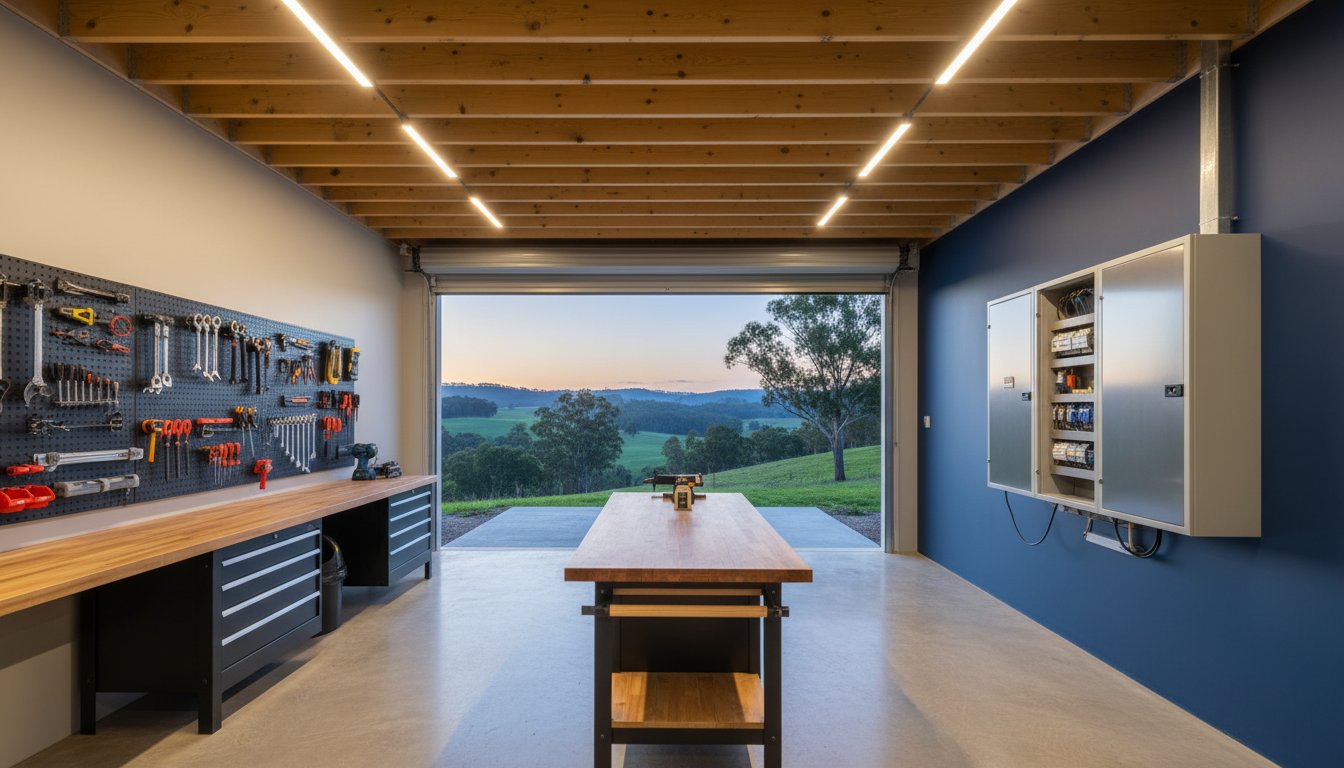
Getting your shed wiring australia project right means thinking about how you'll actually use the space every day. A poorly planned layout leads to a web of extension cords and dark corners that make work difficult. We recommend installing double GPOs (General Purpose Outlets) every 1.5 metres along your primary workbenches. This ensures you're never more than a short reach away from power. Mounting these outlets at 1200mm above the floor keeps them clear of benches while preventing cables from dangling into your workspace. For heavy machinery like table saws or compressors, we often install dedicated 15-amp circuits to prevent nuisance tripping when the motor kicks in.
When constructing these workbenches, using high-quality materials from specialists like Greenhill Timbers ensures a durable surface that can withstand years of heavy use alongside your new electrical setup.
Workshop Lighting and LED Solutions
Effective lighting is a safety requirement, not just a convenience. We suggest 5000K cool white LED batten lights for most workshops. This specific colour temperature mimics natural daylight, which helps maintain focus and reduces eye strain during detailed tasks. You should position your primary lights directly over the front edge of your workbenches. This placement ensures that your body doesn't cast a shadow over your project while you're working.
For those creating a hybrid space or a high-end hobby room, integrating LED strip lighting under cabinetry or along shelving provides excellent task illumination without the bulk of traditional fixtures. Outside the shed, 20-watt LED sensor lights are a must-have. They provide immediate visibility for night-time access and act as a strong deterrent for intruders. These units are highly efficient, often costing less than A$10 per year to run even with frequent activations.
Data, Wi-Fi, and Connectivity
Most sheds in the Southern Highlands are built with steel frames and Colorbond cladding. This creates a "Faraday cage" effect that is notorious for killing wireless signals. In our experience, metal cladding can cause a 90% drop in Wi-Fi signal strength. This is why Wi-Fi extenders often fail in rural outbuildings; they can't repeat a signal that can't get through the wall in the first place.
A hardwired Cat6 data point is the most reliable solution for 2026. It provides a stable 1Gbps connection, which is vital if you're running a home office or streaming high-definition repair tutorials. This is particularly important given Mittagong's rural topography. The rolling hills and local valleys can already make mobile reception spotty. A physical data cable buried in the same trench as your shed wiring australia mains (with proper separation) ensures you have a rock-solid connection regardless of the weather or your shed's construction materials.
Ready to plan a workshop that actually works? Book a shed fit-out consultation with our local Mittagong team today.
Why Professional Shed Wiring is Non-Negotiable
When you choose a licensed electrician, you aren't just paying for cables and outlets. You're investing in a certified installation that protects your property value in Bowral. A compliant shed adds thousands to a home's resale price. Uncertified DIY work does the opposite. It can void your insurance policy and lead to costly emergency fault finding when circuits inevitably fail under load.
This principle of professional work adding value is universal in the home improvement industry, from local electrical jobs to full renovations managed by firms like Exterior Specialist LLC. Quality craftsmanship is always a sound investment.
Professional installation ensures your shed handles modern demands. Whether you're running a heavy-duty lathe or a high-end home office, the wiring needs to be robust. We've seen local projects where DIY shortcuts led to melted insulation and charred timber. It's not worth the gamble. Our team provides a Certificate of Electrical Safety (CES) for every job. This gives you the documentation you need for future property inspections and peace of mind today.
The Peace of Mind Factor
Safety switches are your first line of defense. We install advanced RCDs that trip in less than 30 milliseconds if a fault occurs. This level of protection is a core requirement of the 2026 Australian Standards. Working with a local Mittagong team means you've got support right around the corner. If you ever face an issue, you won't be waiting days for a technician from the city. We know the local grid and the specific environmental challenges of the Highlands, from damp winters to high-wind areas.
Getting a Quote for Your Shed Project
Preparing for your consultation saves time and money. Have a clear plan of where you want your benches, lights, and heavy machinery. This helps us calculate the exact load requirements for your sub-board. When we provide a quote, we break it down clearly so you see exactly what you're paying for. Typical quotes include:
- Materials: High-quality conduits, cabling, and weatherproof outlets designed for Australian conditions.
- Labour: Expert installation, trenching, and the critical connection to your main switchboard.
- Certification: All necessary compliance paperwork and rigorous safety testing.
Don't leave your shed wiring australia to chance. Contact us today to schedule your onsite assessment in the Southern Highlands. We'll walk through your space, identify the best cable routes, and provide a transparent, fixed-price quote to get your project powered up safely.
Power Up Your Southern Highlands Workshop Today
Building a functional workspace requires more than just four walls; it needs a safe, reliable power source that meets 2026 standards. You now understand that AS/NZS 3000 compliance is the baseline for any legal installation in New South Wales. Getting your power load calculations right prevents future outages, while smart trenching protects your investment for decades. Choosing the right shed wiring australia specialist ensures your lighting and data points are positioned exactly where you need them for maximum productivity.
Our team consists of fully licensed and insured NSW electricians who live and work right here in the community. We are Southern Highlands local specialists who take pride in delivering honest, no-nonsense service to our neighbors. We guarantee that your project will meet every safety regulation, giving you total peace of mind. Don't leave your safety to chance or unqualified handymen. It's time to turn that empty shed into a high-performance hub.
Get a professional quote for your shed wiring in Mittagong or Bowral and let's get your project started. We look forward to helping you build something great.
Frequently Asked Questions
Can I dig the trench for my shed wiring myself to save money?
You can dig the trench yourself to save on labor costs, but it must meet the strict AS/NZS 3000 standards for shed wiring australia. We recommend chatting with your local electrician before you start digging to ensure the path is clear of existing utilities. Most residential trenches need to be 600mm deep. Doing the grunt work yourself can save you roughly A$80 to A$120 per hour in professional labor charges.
Do I need a separate switchboard inside my shed?
You need a separate sub-board if you plan on running multiple circuits for lights, power points, or heavy machinery. A dedicated board allows you to reset a tripped switch without walking back to the main house in the dark. It also ensures your shed has its own RCD protection. This setup is a standard requirement for any workshop using more than a single light and one outlet.
What is the standard depth for underground electrical cables in Australia?
The standard depth for underground electrical cables in Australia is 600mm for Category A wiring systems. If you use heavy-duty conduit or place a concrete cover over the line, regulations may allow for a shallower depth of 450mm. We always install orange marker tape 300mm above the conduit. This provides a visual warning for anyone digging in the future and prevents accidental contact with live wires.
How many power points should I install in a standard workshop?
We recommend installing a minimum of one double power point every 2 meters along your workbenches. A standard 6m x 6m workshop usually requires 8 to 10 outlets to avoid the clutter of dangerous power boards. Don't forget to include a dedicated 15-amp outlet if you use a welder or large compressor. Planning for 20% more capacity than you currently need prevents future headaches as your tool collection grows.
Can I run my shed off an extension cord permanently?
You cannot legally or safely power a shed with a permanent extension cord in Australia. Extension leads are for temporary use only and aren't built to withstand Southern Highlands weather or UV exposure. Long-term use creates a high fire risk and can void your home insurance policy. Proper shed wiring australia ensures your building is compliant, safe, and fully covered by your insurance provider.
Will adding power to my shed trip my house's main safety switch?
Your house safety switch will trip if the shed's electrical load exceeds your main switchboard's capacity or if there's a ground fault. We prevent this by installing a dedicated sub-board with its own RCDs. This isolates any electrical issues to the shed alone. If your home was built before 2000, you might need a switchboard upgrade to handle the additional demand of a modern powered workshop.
How do I get Wi-Fi to work inside a metal shed?
Metal walls act like a Faraday cage and block 90% of Wi-Fi signals from your main house. The most reliable fix is running a weatherproof Cat6 Ethernet cable in the same trench as your power, provided there's 300mm separation. Alternatively, we can install a Point-to-Point wireless bridge. These units mount to the exterior of the buildings and provide a 100% stable connection for streaming or security cameras.
What is a Certificate of Compliance (CCEW) and why do I need one?
A Certificate of Compliance for Electrical Work (CCEW) is a mandatory document proving your installation meets AS/NZS 3000 safety standards. In NSW, licensed electricians must submit this to Fair Trading and the network provider within 7 days of completion. You need this certificate for insurance claims and future property sales. It's your guarantee that the work is safe, legal, and performed by a fully insured professional.