
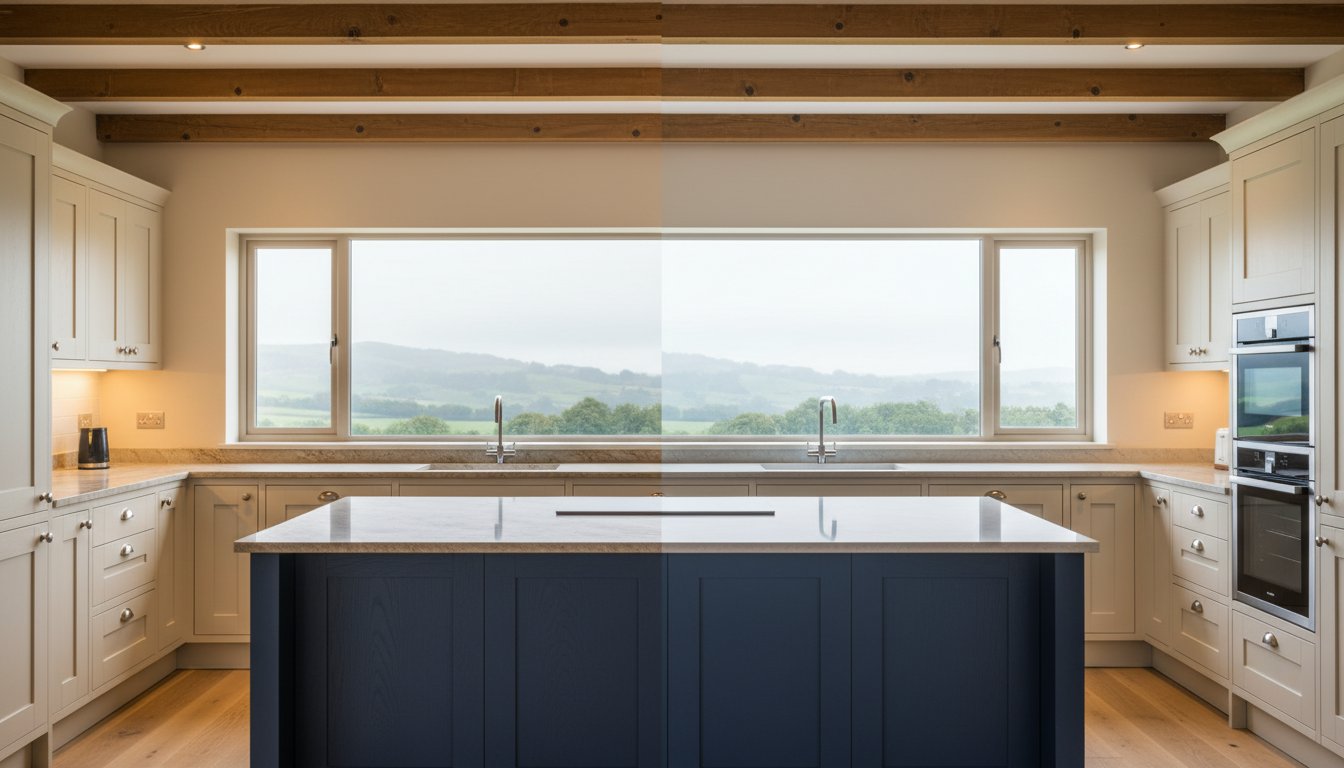
Last Tuesday, Sarah in Bowral spent A$240 on new globes only to find her cozy 1920s lounge suddenly looked like a sterile hospital wing. It's a frustrating mistake that happens more often than you think. This led colour temperature guide is designed to stop that from happening to you. You likely already know that lighting sets the mood, but getting the balance right between a historic cottage and a sleek Mittagong kitchen renovation is a specific challenge that requires a local touch.
We agree that your home should feel like a sanctuary, not a laboratory. You're about to learn how to master Kelvin ratings to enhance every corner of your property. We'll explain the practical differences between 3000K and 4000K, how different light affects your heritage paint choices, and exactly when to call a professional for custom LED strip integration. Let's get your Southern Highlands home glowing with the right light for every room.
Key Takeaways
- Understand the Kelvin scale to master the visual "warmth" of your home, ensuring your lighting matches your architecture and lifestyle.
- Follow our led colour temperature guide to decide between warm 3000K and cool 4000K options for different areas of your property.
- Learn how to layer ambient and task lighting across different rooms to create a functional yet inviting atmosphere in every space.
- Discover specific lighting tips for Southern Highlands homes that combat misty mornings and early winter sunsets with the right internal glow.
- Find out why professional-grade LEDs and expert installation are essential for achieving consistent, flicker-free light quality throughout your home.
Understanding Kelvin: The Technical Foundation of LED Lighting
Kelvin is a measurement of light colour, not heat output.
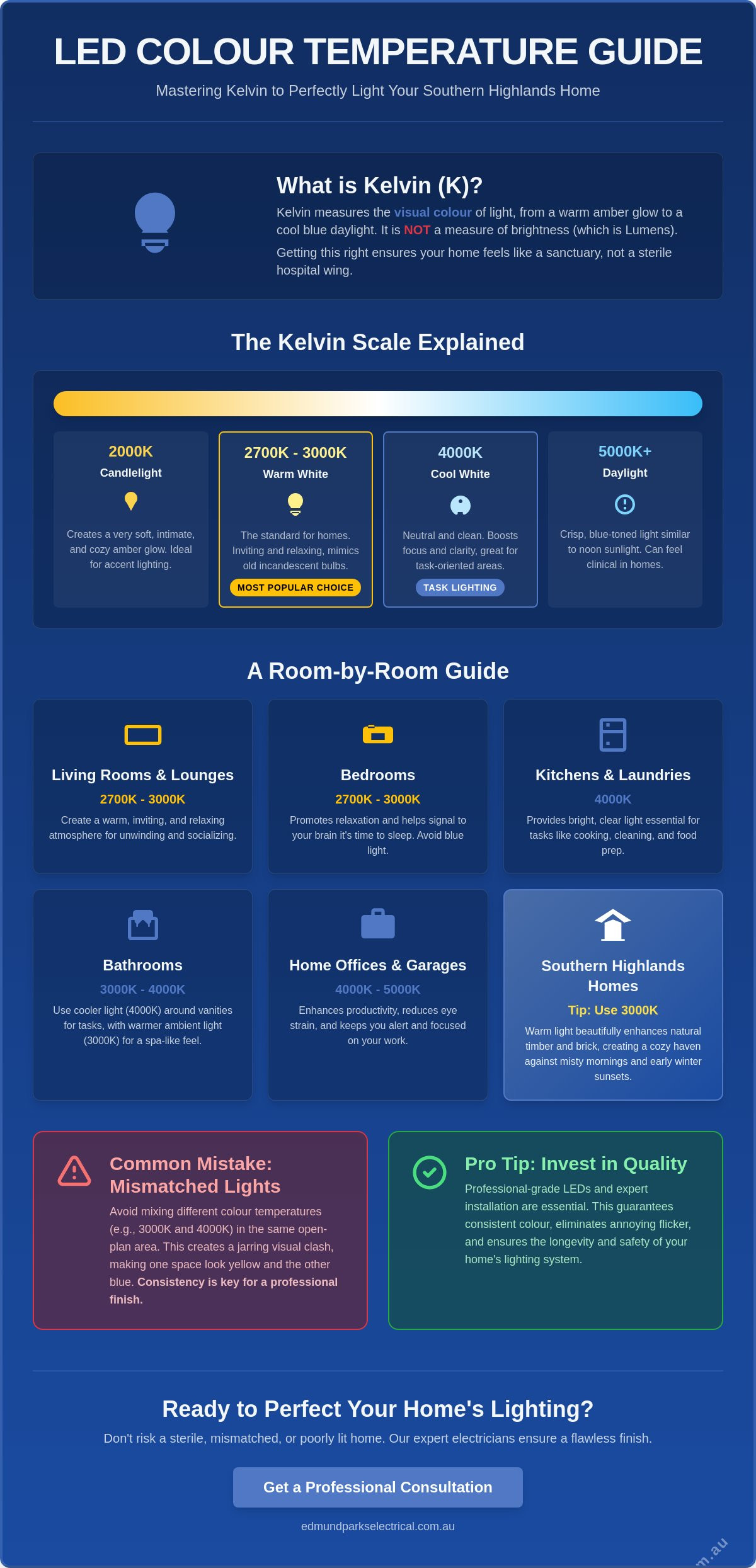
When you start planning your home lighting, the term Correlated Colour Temperature (CCT) will appear on every box of globes. This value describes the visual "warmth" or "coolness" of the light. We measure this on the Kelvin (K) scale. Lower numbers, like 2000K, produce a rich amber glow. Higher numbers, such as 5000K, create a crisp, blue-toned light. Understanding this led colour temperature guide is the first step toward creating a comfortable home environment.
A common mistake is assuming that a higher Kelvin rating equals a brighter light. This isn't true. Brightness is measured in Lumens, while Kelvin determines the specific hue. A 10W LED bulb can produce 800 Lumens regardless of whether it's warm or cool. Scientists define Color temperature by heating a theoretical black-body radiator until it glows a specific colour; it's a technical standard that ensures consistency across different lighting brands.
The Kelvin Scale: From Candlelight to Daylight
- 2000K (Amber/Candlelight): This range creates a very soft, orange-tinted light. It's perfect for accent lighting or decorative lamps in a library or lounge where you want a cozy, intimate atmosphere.
- 2700K to 3000K (Warm White): This is the standard for most Australian residential properties. It mimics the familiar glow of old incandescent bulbs. It's soft, inviting, and works well in bedrooms and living areas.
- 4000K to 5000K (Cool White/Daylight): These temperatures lean toward the blue end of the spectrum. They mimic natural sunlight at noon. This range is ideal for task-heavy areas where visual clarity is vital.
Why CCT Matters for Your Southern Highlands Renovation
The colour temperature you choose changes how your interior design looks. Southern Highlands homes often feature natural materials like local timber or exposed brick. A cool 5000K light can make warm timber look washed out or grey. Conversely, a warm 2700K light enhances the red and brown tones in your floorboards. It's about more than just aesthetics; it's about biology. Exposure to blue-heavy light at night can disrupt your sleep by suppressing melatonin. Warm light signals to your brain that it's time to wind down after a long day.
Getting your lighting right requires planning before you commit to hardware. Our team often sees homeowners buy the wrong globes, leading to a home that feels like a sterile hospital or a dark cave. If you're planning a project, check out our resource on LED lighting installation in Mittagong to ensure you're making the right choice for your specific space. Following a professional led colour temperature guide helps you avoid costly mistakes during your renovation and ensures your home is both functional and safe.
Comparing Warm White vs. Cool White for Local Homes
Choosing between warm and cool light isn't just about brightness; it's about the mood of your home. Modern LEDs have come a long way from the sterile, blue-tinted globes of the early 2010s. Today's technology allows for high colour rendering, meaning your furniture and paint look exactly how they should. This U.S. Department of Energy guide to LED lighting highlights how these advancements have made LEDs the standard for energy efficiency and colour control. As a reliable sparky, my advice is simple: when you're stuck, 3000K is almost always the safest residential bet. It provides a clean light that doesn't feel clinical.
One common mistake I see in Southern Highlands renovations is mixing temperatures in the same open-plan area. If your kitchen has 4000K downlights but the attached lounge uses 3000K lamps, the visual clash is distracting. It makes one side of the room look yellow and the other look blue. Consistency is key to a professional finish. Stick to one primary temperature for your main living zones to keep the aesthetic seamless. This led colour temperature guide aims to help you avoid those mismatched results that can ruin a high-end interior.
When to Choose Warm White (2700K - 3000K)
Warm white is the gold standard for creating a cozy Highlands atmosphere during our freezing winter months. It mimics the soft glow of traditional halogen bulbs without the massive power bill. It's the perfect partner for local architectural features like:
- Polished timber flooring and wooden ceiling beams
- Traditional red or reclaimed brickwork
- Stone fireplaces and textured fabrics
I always recommend 3000K for bedrooms, dining rooms, and main lounge areas. It signals to your brain that it's time to wind down, making it much better for your evening routine than harsher blue-toned lights.
The Case for Cool White and Daylight (4000K - 6000K)
Cool white (4000K) is the "neutral" choice often found in modern Mittagong kitchens and laundries. It provides a crisp, clean look that helps with task-based work like chopping veggies or checking for stains in the wash. For high-precision environments like a backyard workshop or a double garage, 6000K (Daylight) is the best option for visibility. It's bright and energising, though it can feel a bit like a hospital if used in a bedroom.
To avoid a cold or "sterile" feeling, try layering your light. You might install 4000K downlights in the kitchen for safety and clarity, then add 3000K pendant lights over the island bench for a softer touch during dinner. If you need help mapping out your home's lighting layout, our licensed electricians can provide a tailored plan that balances function with comfort.
A Room-by-Room Guide to Selecting LED Colour Temperatures
Most Southern Highlands homes benefit from using two or three distinct colour temperatures rather than a single setting for every room. It isn't a one-size-fits-all situation. You need to think about layered lighting. This involves balancing ambient, task, and accent lights to suit how you actually use your space. A well-planned led colour temperature guide helps you create transitions that feel natural rather than jarring.
Keep your Correlated Colour Temperature (CCT) consistent within open sightlines. If you can see your hallway from your lounge, don't mix a cold blue light with a warm yellow one. It looks messy and unprofessional. We always suggest installing dimmers. They give you the power to soften the intensity of your lights, which is just as important as the colour itself. Understanding LED Color Characteristics helps clarify why choosing the right CCT is vital for both visual comfort and home safety.
Kitchens and Bathrooms: Prioritising Task Clarity
We recommend 4000K (Cool White) for kitchen lighting in Mittagong. It's about safety and precision. You need clear visibility for chopping, prepping food, and reading recipes. This same logic applies to bathrooms. 4000K provides the clarity needed for grooming and applying makeup without strange shadows. To add a touch of luxury, install 3000K LED strips under cabinets. These act as a soft night-light that's easy on the eyes during a midnight snack run.
Living Rooms and Bedrooms: Creating a Sanctuary
These areas are for relaxation. Stick to 2700K or 3000K (Warm White) to support your circadian rhythm. These warmer tones mimic the sunset, helping your body wind down after a long day. You can achieve a luxury hotel feel by using warm LED strips in recessed ceilings or bulkheads. Just make sure you match your bedside lamp globes to your ceiling downlights. If the colours clash, the room won't feel like the sanctuary it's meant to be.
Home Offices and Rural Sheds: Boosting Productivity
Productivity requires a different approach. Using 4000K or higher in a home office helps maintain focus and significantly reduces eye strain during long hours at a screen. For rural sheds in the Southern Highlands, visibility and safety are the main priorities. We use high-CRI (Colour Rendering Index) LEDs in these workspaces. This ensures that wire colours and tool markings are easy to distinguish, preventing mistakes. Following a professional led colour temperature guide ensures your work zones are as efficient as possible.
Local Considerations: Lighting for Southern Highlands Architecture
Living in the Southern Highlands means dealing with unique environmental factors. Our misty mornings and early winter sunsets, which often occur before 5:00 PM in June, change how you experience your home. When the fog rolls into Moss Vale or Bowral, your indoor lighting has to work harder to maintain a sense of warmth. This led colour temperature guide helps you combat the grey outdoors by creating a sanctuary inside.
The "warmth" requirement isn't just a preference; it's a necessity during our long winters. A space lit with cool white can feel icy when it's 2 degrees outside. For those looking to add a subtle glow to joinery or shelving, getting professional advice for LED strip lighting in the Southern Highlands ensures your installation handles the local climate and matches your home’s specific architectural style. Our team sees many homeowners struggle with "flat" lighting that fails to account for the heavy cloud cover common in the region.
Heritage Homes in Bowral: Preserving Period Charm
Bowral is famous for its Victorian and Edwardian cottages dating back to the late 1800s. In these properties, 2700K is almost always better than 3000K. The extra warmth mimics the original incandescent bulbs used during that era. It prevents "glare" on antique mahogany furniture and doesn't wash out the deep pigments found in traditional heritage paint ranges. To get the best results in a heritage setting, consider these tips:
- Choose 2700K to complement original timber floorboards and high-gloss heritage paints.
- Install dimmers to adjust the mood as the Highlands fog sets in during the afternoon.
- Hide LED strips behind pelmets to wash light up toward 3-metre ceilings, highlighting original cornices.
Modern Fit-outs and Rural Properties
Large rural properties often feature massive floor-to-ceiling windows. At night, these become "black holes" if your internal lighting is too bright or the wrong temperature, as the glass reflects everything back at you. You can fix this by balancing your indoor 3000K lights with strategic outdoor lighting in Bowral. Transitioning from warm interior tones to slightly cooler 4000K tones for garden features creates depth and reduces internal reflections. In Mittagong, industrial-style commercial fit-outs benefit from 4000K "cool white" to maintain a crisp, productive atmosphere in high-ceilinged workshops or modern retail spaces. Following a professional led colour temperature guide ensures these larger volumes of space don't feel cavernous or shadows-heavy.
Need help choosing the right globes for your Highlands home? Contact our local team today for an expert lighting consultation.
Professional LED Installation: Achieving Consistency and Quality
Buying a box of cheap LEDs from a big-box retailer often leads to a "rainbow effect" across your ceiling. Even if the box says 3000K, different manufacturing batches, known as "bins," can vary by as much as 500K. This makes one downlight look yellow while the one next to it looks slightly green. Professional LED installation ensures your home follows a strict led colour temperature guide where every light matches perfectly. High-quality LED strips use professional-grade COB (Chip on Board) technology. This eliminates the dotted look common in cheap alternatives, providing a smooth, continuous glow under kitchen cabinets or along hallways. A licensed sparky doesn't just swap bulbs; we design a cohesive system that works every time you flip the switch.
The Importance of Colour Consistency and Batching
Mixing different brands of "Warm White" bulbs is a recipe for visual clutter. One brand's 2700K is often another brand's 3100K. Edmund Parks Electrical sources components that are batch-tested for colour fidelity. This is vital for large open-plan living areas in Southern Highlands homes where light travels across long distances. We ensure every fitting comes from the same production run. This prevents a "patchwork" ceiling where light pools look uneven and messy. We focus on high Colour Rendering Index (CRI) ratings of 90 or above. This keeps your furniture and wall colours looking exactly how the designer intended.
- Eliminate Binning Errors: We source single-bin LEDs to ensure 100% colour uniformity across your entire floor plan.
- High CRI Performance: Better light quality means your home's textures and colours pop rather than looking washed out.
- Seamless Illumination: Professional-grade strips provide edge-to-edge light without the dark spots found in DIY kits.
Integrating LED Strips with Smart Dimming
Modern homes now use "Tuneable White" LEDs. These allow you to transition from a crisp 4000K for morning coffee to a relaxing 2700K for evening winding down. This technology mimics natural light cycles to help your sleep patterns. However, pairing these with the wrong dimmer switch causes flickering, buzzing, or premature failure. We match your LED driver specifically to the load requirements of your system. A licensed electrician ensures all wiring meets AS/NZS 3000 standards. This protects your property from the fire risks associated with overheating cheap, uncertified drivers. Professional installation gives you a system that's safe, reliable, and easy to control from your phone or wall switch.
Don't risk your home's safety or aesthetic on sub-par components. Using a professional led colour temperature guide and expert installation ensures your Southern Highlands property stays bright and secure. We handle the technical details so you can enjoy the perfect atmosphere. Contact Edmund Parks Electrical today to upgrade your home lighting with guaranteed quality and local expertise.
Bring Your Southern Highlands Home to Life
Choosing the right lighting is about more than just visibility; it's about creating an atmosphere that suits the unique character of your property. This led colour temperature guide highlights how selecting the correct Kelvin rating transforms a space from a cold environment into a warm, inviting sanctuary. Whether you're highlighting heritage features in Bowral or modernising a kitchen in Mittagong, getting the balance of warm and cool tones right is essential for both aesthetics and daily function.
Since 2018, Edmund Parks Electrical has provided expert guidance and high-quality workmanship across the Southern Highlands. As a fully licensed and insured NSW electrician, I specialise in custom LED strip installations that add a professional, seamless finish to any room. We take the guesswork out of your electrical projects, ensuring every light is consistent, safe, and perfectly positioned. Don't settle for flickering lights or mismatched colours when expert help is just around the corner.
Get a Professional LED Lighting Quote for Your Highlands Home
We look forward to helping you create a bright and beautiful space you'll love coming home to every day.
Frequently Asked Questions
What is the best colour temperature for a living room in the Southern Highlands?
Warm white, specifically 3000K, is the best choice for a living room in the Southern Highlands. This temperature provides a cozy, inviting glow that balances the cooler mountain climate during the winter months. It's the standard for 85% of the residential lounge room upgrades we perform. This warmth mimics traditional halogen bulbs, making your home feel relaxing and comfortable after the sun goes down.
Can I mix warm white and cool white LEDs in the same room?
You shouldn't mix warm white and cool white LEDs in the same open space because it creates a clashing, inconsistent look. A 1000K difference in colour temperature is highly noticeable to the human eye and often looks like an installation error. Stick to one temperature per room to maintain a professional finish. If you're following a led colour temperature guide, you'll see that consistency is vital for visual comfort and home aesthetics.
What does 3000K mean on an LED light bulb package?
The 3000K rating stands for 3000 Kelvin, which measures the "colour" of the light rather than its actual brightness or heat. A 3000K rating indicates a warm white light with a slightly yellow undertone, similar to a standard incandescent bulb. In the lighting industry, 0 is absolute black and 10,000 is bright blue. This specific 3000K level is the most popular choice for 70% of Australian domestic lighting installations.
Is 4000K too bright for a home office or study area?
A 4000K setting isn't too bright for a home office; it's actually the recommended temperature for productivity and focus. This "cool white" or "neutral" light mimics natural daylight at roughly 10:00 AM, which helps reduce eye strain during long work sessions. Research shows that 4000K lighting can improve alertness by up to 15% compared to warmer tones. It's a smart, functional choice for any Southern Highlands study area.
How do I choose a colour temperature for outdoor garden lighting in Bowral?
For outdoor garden lighting in Bowral, choose a warm 2700K to 3000K range to highlight the natural textures of stone walls and deciduous trees. Cooler lights often make foliage look sickly or artificial in a residential garden setting. Using 2700K fixtures creates a high-end, resort-style feel that suits local Bowral architecture. We find that 9 out of 10 local homeowners prefer this warmer palette for their evening landscape.
Why do my LED lights look different even though they are both labelled "warm white"?
Your lights look different because "warm white" isn't a strictly regulated term, and the Colour Rendering Index (CRI) varies between brands. A bulb with a 90 CRI will look much richer than a cheap 70 CRI bulb, even if both are labelled 3000K. Manufacturing tolerances can also result in a 200K variance between different production batches. We always recommend buying all your LEDs from the same brand and batch for a perfect match.
Does colour temperature affect the cost of LED lighting installation?
Colour temperature doesn't affect the cost of your LED lighting installation since the hardware price is usually identical for 3000K or 5000K models. You'll pay the same labour rates for a licensed electrician to install any standard LED downlight. Most Australian wholesalers sell these units at the same price point regardless of the Kelvin rating. The real cost factors are the brand quality and whether you need dimmable drivers or smart home integration.
Can LED colour temperature help with Seasonal Affective Disorder (SAD) during Highlands winters?
LED colour temperature can help manage Seasonal Affective Disorder (SAD) during grey Southern Highlands winters by mimicking natural sunlight. Using 5000K to 6500K "daylight" bulbs in the morning can help regulate your circadian rhythm. This led colour temperature guide suggests using these cooler tones in kitchens or bathrooms to boost your morning mood. Studies indicate that exposure to 2500 lux of bright light can significantly improve energy levels during the colder months.


