The fastest EV charger on the market might actually be the worst choice for your Southern Highlands home. While it's tempting to chase the highest numbers, installing a 22kW unit often requires a three-phase power upgrade that only about 15% of homes currently have. It's frustrating to feel stuck between slow trickle charging and the high costs of public stations, especially when you're worried about whether your existing switchboard is even safe for the extra load.
You deserve the peace of mind that comes with a "full tank" every morning without risking a blown fuse or a safety hazard. This guide explains how to secure a reliable home EV charging station Mittagong families can trust to be both fast and efficient. We will look at why a 7kW wallbox is often the smartest pick for our local grid, the essential safety standards you need to meet, and how to tap into the NSW Government's 0% interest loans available in 2026 to make your transition to electric driving affordable and secure.
Key Takeaways
- Understand the benefits of a Level 2 AC Wallbox over standard plugs for faster and more reliable daily charging.
- Determine whether a 7kW or 22kW unit fits your property by assessing your home's current single-phase or three-phase power supply.
- Ensure your property is grid-ready by installing a dedicated circuit and the correct safety switch for a home EV charging station Mittagong homeowners can use safely.
- Follow a professional five-step installation process that begins with a detailed site audit of your switchboard and electrical capacity.
- Learn how to integrate your new charger with existing energy efficient upgrades to maximize your home's long-term utility and value.
Why a Dedicated Home EV Charging Station is Essential in Mittagong
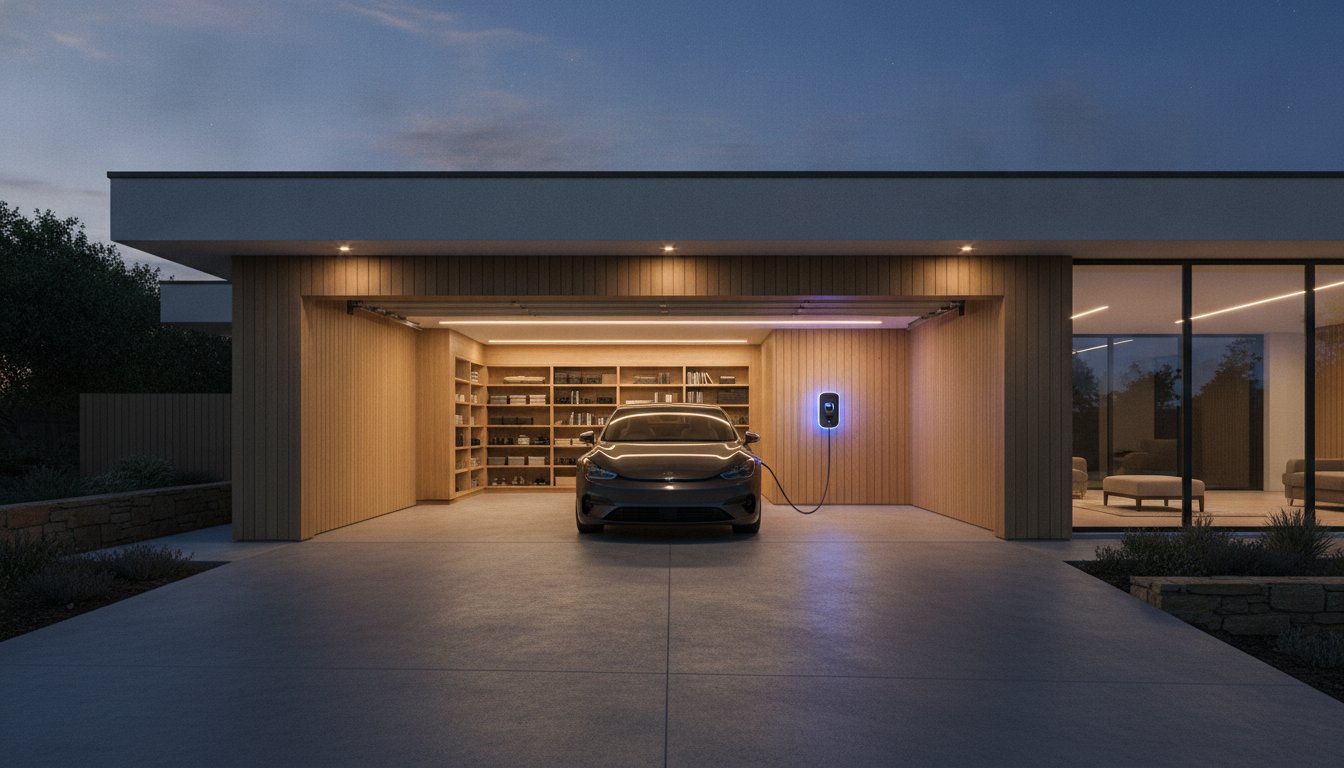
Most new EV owners in Mittagong start by plugging into a standard 10A wall socket. It's easy, but it's also incredibly slow and potentially dangerous for your home's wiring. A dedicated home EV charging station Mittagong homeowners can rely on is technically known as electric vehicle supply equipment (EVSE). This Level 2 AC unit is hardwired into your home's electrical system, providing a stable and much faster power flow than a regular plug.
Think about the convenience. Instead of hunting for an available plug at a shopping centre, you simply pull into your driveway and connect. You wake up to a "full tank" every morning. It's the ultimate Southern Highlands luxury. Beyond convenience, the cost savings are significant. Public charging rates in the Highlands have climbed steadily. Charging at home, especially on an off-peak tariff, is the most cost-effective way to run your vehicle in 2026.
Safety is the biggest factor. Standard power points aren't designed to run at maximum capacity for 12 or 15 hours straight. This "trickle charging" creates heat. Over time, that heat can degrade your wiring or melt a socket. A professionally installed wallbox uses a dedicated circuit and a high-quality safety switch to manage the load safely. It's a professional solution for a high-stakes appliance.
The Limitations of Public Charging in the Highlands
Public infrastructure in Mittagong hasn't kept pace with the EV boom. On peak tourist weekends, spots like the Mittagong RSL or the Marketplace often have long queues. You don't want to spend your Saturday morning waiting for a bay to open up in Bowral. Home charging removes that "queue anxiety" entirely. It ensures your car is ready for the commute or a weekend trip without relying on shared local infrastructure.
Boosting Property Value in the Southern Highlands
EV readiness is now a major selling point in the local real estate market. Buyers are looking for homes that already have the infrastructure in place. By investing in a home EV charging station Mittagong residents are essentially future-proofing their property. When you combine this with other energy efficient upgrades, you create a high-tech, low-cost home that stands out. Professional installation also means you have the technical documentation and compliance certificates ready for any future building inspection or sale.
Choosing the Right Charger: 7kW vs. 22kW for Your Home
Selecting the right hardware for your home EV charging station Mittagong setup depends entirely on your house's electrical capacity. Many online guides suggest that 22kW is the gold standard because it's faster. In reality, a 22kW charger requires a three-phase power supply. Only about 15% of Australian residential properties currently have this connection. For the vast majority of Southern Highlands homeowners, a 7.2kW single-phase charger is the practical and most cost-effective choice. It provides more than enough speed to charge an average EV from empty to full overnight.
By 2026, the Type 2 (Mennekes) plug has become the universal standard for almost all new electric vehicles in Australia. When choosing your hardware, look for "Smart Chargers" with integrated Wi-Fi. These units allow you to schedule charging via a smartphone app. This is vital for taking advantage of off-peak electricity rates or managing your home's total load when other heavy appliances are running. If you aren't sure what your home can handle, a professional switchboard upgrade assessment is the best place to start.
Single-Phase vs. Three-Phase Power in Mittagong
You can identify your power supply by looking at your main switchboard. A single-phase connection usually has one main switch, while three-phase power has a wider switch or three toggles linked together. Upgrading from single to three-phase power is a significant project that involves new cabling from the street and a complete switchboard overhaul. While it allows for 22kW charging, it's rarely necessary for a single-vehicle household. "Most Mittagong homes can gain 40-50km of range per hour with a standard 7kW installation." This covers the average daily commute in just a couple of hours.
Tethered vs. Untethered Chargers
This choice comes down to personal preference and garage layout. A tethered charger has the cable permanently attached, much like a petrol pump. It's convenient because you don't have to unpack a cable from your boot every night. An untethered charger is just a socket on the wall. You provide your own cable to plug in. For our Southern Highlands climate, durability matters.
- Tethered: Faster to use but the cable is constantly exposed to frosty Mittagong winters.
- Untethered: Offers a cleaner look and better future-proofing, as you can easily swap cables if you buy a car with a different port in the future.
Is Your Switchboard Ready? Essential Safety Checks for EV Owners
Your new EV charger is likely the most power-hungry device you'll ever own. It pulls more current than your oven, air conditioner, and electric hot water system combined. For a home EV charging station Mittagong properties need a robust electrical foundation. Many heritage homes in the Southern Highlands still rely on older switchboards that weren't designed for this level of constant demand. Plugging a high-draw appliance into an outdated board can lead to overheating or frequent tripping. This is why we often recommend switchboard upgrades in Bowral and surrounding areas before the first charge occurs.
A safe installation requires a dedicated circuit. This means the charger has its own direct line back to the board, completely separate from your lights and power points. It also requires a specific safety switch. Standard Residual Current Devices (RCDs) found in most homes might not detect the specific types of electrical faults that can occur during EV charging. Professional installers check these components first to ensure your home remains compliant with Australian wiring rules.
The Role of Safety Switches (RCDs) in EV Charging
EV charging involves converting AC power from your home into DC power for the car's battery. This process can sometimes leak small amounts of DC current back into your home's wiring. A standard safety switch can "blind" itself in this scenario, failing to trip when it should. To stay compliant with AS/NZS 3000:2018 standards in NSW, we typically install Type B RCDs. These are engineered to handle the unique electrical signature of an EV load, ensuring your family remains protected from electric shocks.
Load Management and Your Grid Connection
Your home has a maximum limit on how much power it can draw from the street at once. If you're roasting a Sunday lunch, running the heater, and charging your car simultaneously, you might exceed that limit. This is where modern load management comes in. Smart chargers can monitor your home’s total usage in real-time. If the demand gets too high, the charger automatically throttles its speed to prevent blowing the main service fuse. It's a critical feature for properties in Joadja or High Range where the grid connection might be more limited. A professional audit is the only way to know exactly how much "headroom" your property has for a home EV charging station Mittagong installation.
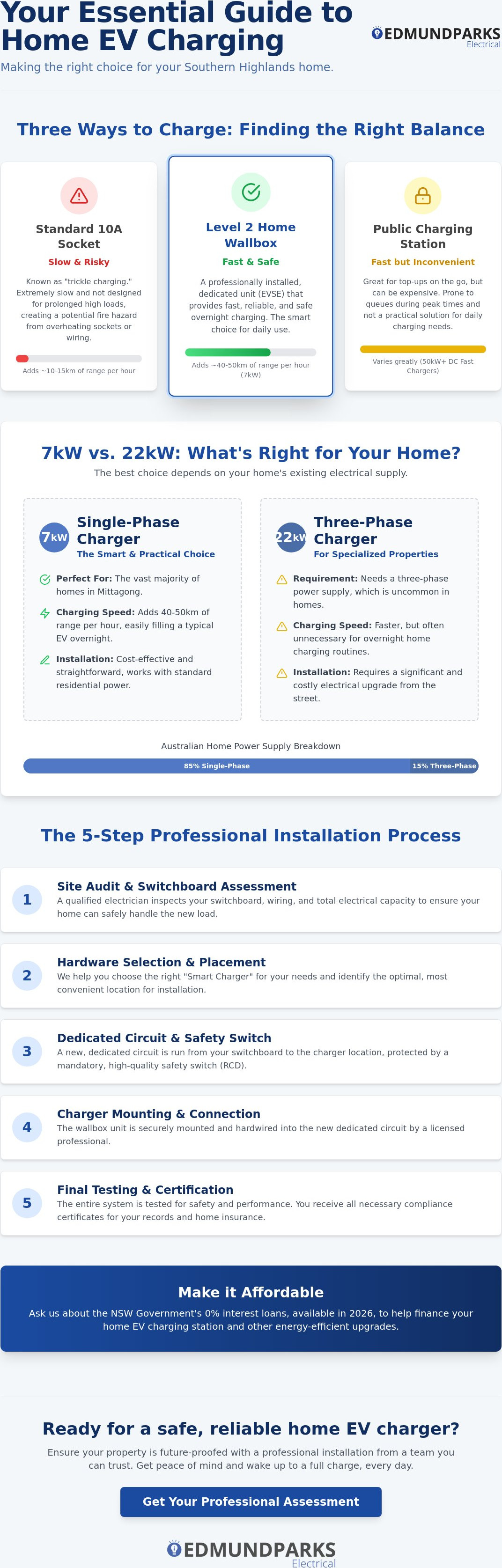
The Professional Installation Process in 5 Steps
Getting your home EV charging station Mittagong ready doesn't have to be a stressful project. We follow a clear, professional roadmap to ensure your installation is safe, compliant, and easy to use. It starts with understanding your specific property layout and ends with you feeling confident in your new tech.
- Step 1: Initial Site Audit. We check your switchboard capacity and measure the cable run distance. The path from your board to the garage or carport determines the complexity of the job.
- Step 2: Hardware Selection. We help you choose a wallbox that fits your vehicle's specs and your budget. We focus on reliable brands that handle our local climate.
- Step 3: Circuit Installation. Our team runs heavy-duty, dedicated cabling. We ensure the wiring is neat and protected, whether it's through a ceiling cavity or a sub-floor.
- Step 4: Mounting and Commissioning. Once the unit is secured, we power it up. This step includes testing the software and ensuring the safety switches respond correctly.
- Step 5: Handover. We don't just leave you with a manual. We show you how to use the app, explain the status lights, and help you set up your first charging schedule.
If you're ready to start the process, you can book a professional site audit with our local team today.
Optimal Placement for Your Charging Station
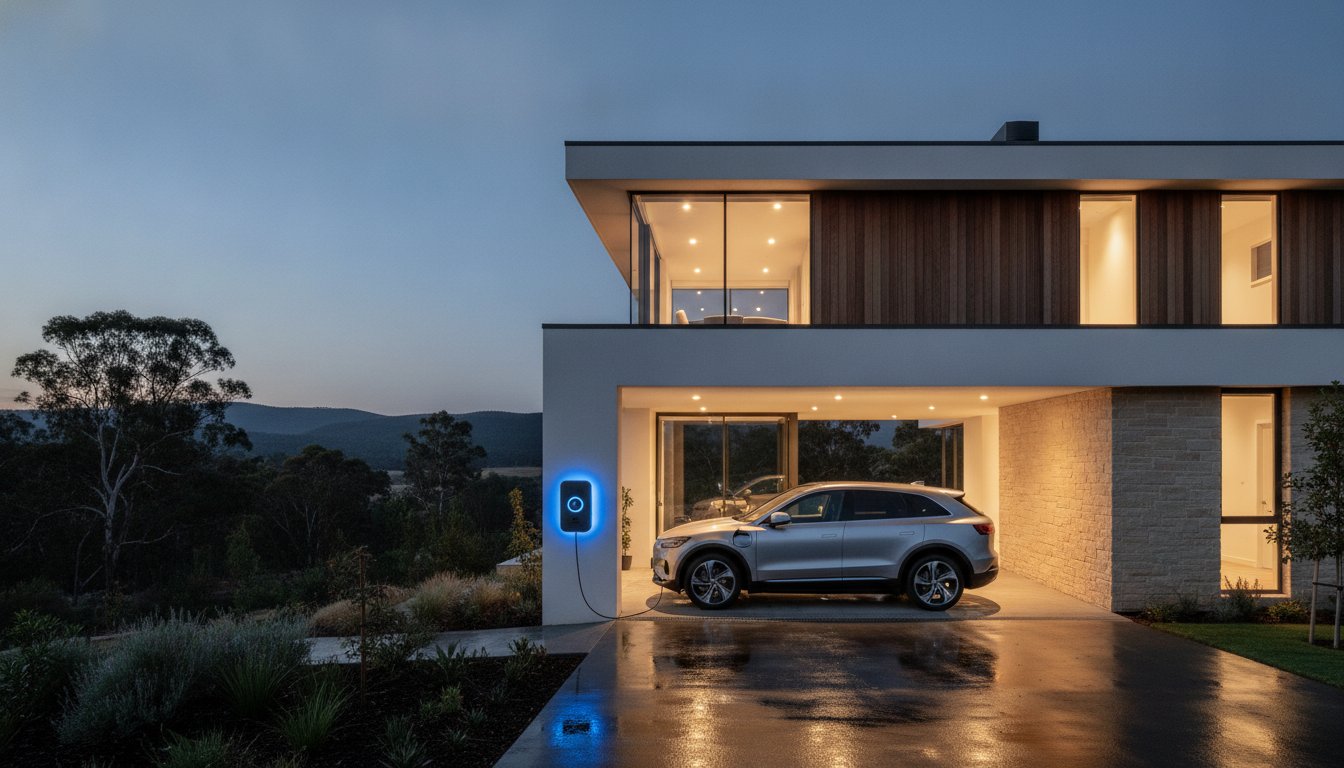
Placement is about more than just where you park. Most smart chargers need a stable Wi-Fi signal to allow for app-based scheduling and firmware updates. If your garage is a "dead zone," we may need to look at data cabling options. For Mittagong homes with detached carports, weather protection is key. We ensure the unit is mounted at a height that's easy to reach but sheltered from driving rain and local wildlife. We also consider the length of the charging cable to ensure it reaches your car's port without becoming a trip hazard.
Off-Peak Charging and Energy Savings
The biggest benefit of a smart home EV charging station Mittagong is the ability to "set and forget." By scheduling your charging for the 1 AM to 5 AM window, you tap into the lowest off-peak rates available in NSW. This significantly reduces your running costs compared to public fast chargers. Integrating your charger with other energy efficient upgrades helps balance your home's total demand. It's a smart way to keep your bills low while ensuring your car is always ready for the morning school run or the commute to Sydney.
Expert EV Charger Installation with Edmund Parks Electrical
Choosing a local professional for your home EV charging station Mittagong installation means working with someone who understands the specific quirks of our regional grid. We don't just pull parts off a shelf and bolt them to the wall. We look at your home's entire electrical ecosystem to ensure a seamless fit. Our focus remains on safety, compliance, and long-term reliability. Every installation we complete meets strict Australian standards. This ensures your insurance stays valid and your family stays safe. We take pride in our craft and stand by every connection we make.
Our expertise extends beyond simple residential setups. We often integrate EV infrastructure with broader commercial and rural electrical services. Whether you're upgrading a farm shed in High Range or setting up a multi-vehicle charging bay for a local business, we have the technical background to handle high-load requirements. It's about building a system that works today and stays ready for the technology of tomorrow. We provide the technical documentation you need for total peace of mind.
Serving Mittagong, Bowral, and the Southern Highlands
We are proud members of this community. Our team regularly services homes and properties in Moss Vale, Bundanoon, and Berrima. Being local means we're just a phone call away if you need future maintenance or have questions about your system's performance. We aren't a fly-in-fly-out service; we are your neighbors. This regional expertise allows us to anticipate common issues found in Highlands properties, from heritage wiring challenges to the specific needs of rural power connections.
Your Local Partner for Energy-Efficient Living
An EV charger is just one piece of a modern, efficient home. We help you fit this technology into a holistic energy strategy. We have extensive experience with complex rural installations in Joadja and Canyonleigh where grid stability can sometimes be a factor. We ensure your charger, switchboard, and other energy efficient upgrades work in harmony without overloading your main connection. Don't leave your safety to chance with a generic installer who doesn't know the area. Book your home EV charging audit today and get a custom assessment from a team that knows the Southern Highlands inside out.
Secure Your Electric Future in the Southern Highlands
Transitioning to an electric vehicle is a major milestone for any Southern Highlands household. It's about more than just a new car. It's about upgrading your home's infrastructure to handle the technology of 2026. By now, you know that a 7kW unit is usually the sweet spot for local homes. You also understand that a professional switchboard audit is the only way to guarantee safety. Installing a home EV charging station Mittagong families can rely on ensures you wake up every morning with a full battery and total confidence in your electrical system.
Don't leave your property's safety to a generic installer. We are fully licensed NSW electrical contractors and specialists in Southern Highlands switchboard upgrades. As a local Mittagong business with a reputation for 5-star reliability, we ensure every connection is compliant and built to last. It's time to stop worrying about public queues and start enjoying the convenience of home charging.
Get a Professional EV Charger Quote for Your Mittagong Home
Frequently Asked Questions
Do I need to upgrade my electricity meter for an EV charger in Mittagong?
Most modern homes already have the digital smart meter required for a charger. If you still have an older analog meter with a spinning disc, your energy retailer will usually need to swap it for a digital version. This allows for time-of-use tracking, which is vital for accessing cheaper off-peak electricity rates during the night.
How much faster is a wallbox compared to a standard power point?
A dedicated wallbox is approximately three times faster than a standard 10A household plug. While a regular power point adds about 10km to 12km of range per hour, a 7kW charger adds roughly 40km to 50km in the same timeframe. This speed makes overnight charging practical for the average daily commute in the Southern Highlands.
Can I install my own EV charging station to save money?
No, you cannot legally or safely install an EV charger yourself in Australia. All fixed electrical work must be performed by a licensed professional to comply with AS/NZS 3000 wiring rules. DIY installation voids your home insurance and the manufacturer's warranty on the charger, while posing a significant fire and shock risk to your property.
Will an EV charger work with my existing solar panels?
Yes, your charger can integrate perfectly with your solar system. Many modern smart chargers feature "solar matching" technology. This allows the unit to monitor your solar production and only charge your car when there is excess power available. It's the most cost-effective way to run a home EV charging station Mittagong owners can implement to minimize grid costs.
What is the best location to install a charger if I have a detached garage?
The best location is on an internal wall near the car's charging port to keep the cable off the ground. For detached garages, we look at the cost of trenching versus running cables through existing structures. You also need to ensure your home Wi-Fi signal reaches the unit, as smart chargers require a stable connection for scheduling and updates.
Does a home EV charger require regular maintenance?
EV chargers require very little ongoing maintenance compared to other appliances. We recommend a quick visual check every few months for any signs of wear on the cable or damage to the plug. Every few years, it's a good idea to have a licensed electrician inspect the internal connections and test the safety switch to ensure everything remains secure.
Are there government rebates for EV charger installation in NSW in 2026?
As of June 2026, there is no universal direct rebate for home chargers in NSW. However, the NSW Government's Home Energy Saver Program offers 0% interest loans of up to $15,000 for energy upgrades. Lower-income households and concession card holders may also be eligible for specific discounts of up to $4,000 for home energy improvements including Level 2 chargers.
What happens if my car uses a Type 1 plug but the charger is Type 2?
If your car uses an older Type 1 inlet, you can still use a Type 2 charger by using a Type 2 to Type 1 adapter cable. This is most easily managed with an "untethered" home EV charging station Mittagong setup. You simply plug your specific adapter cable into the charger's socket, ensuring your system remains flexible for different vehicle models.